Baking soda alone will not unclog a toilet. Mixed with vinegar, it fizzes, but the reaction is gentle and cannot move a solid blockage of paper, wipes, or a toy. It may loosen a very light clog or freshen the bowl. For a toilet in Fayetteville, GA that will not flush, a plunger is the tool that works.
Below is what the fizz can and cannot do, how to plunge correctly, what never to pour in, and the signs that the problem is deeper in the line than the toilet.
What baking soda and vinegar really do
When baking soda meets vinegar, the mix produces carbon dioxide bubbles and water. That looks dramatic, but the force is small. The foam does not push against a blockage in any useful way, and a clog sitting in the toilet trap or the drain just below it stays put.
It can help a little in two cases. A light film of soap or paper pulp may soften, and the bowl gets a fresh smell. Treat it as a bowl cleaner, not a clog remover. If the water level is not dropping after twenty minutes, move on to something stronger.
Some people add salt or boiling water to the mix. Neither adds real force, and boiling water carries its own risk to the bowl. Spend that time on the plunger instead, which moves water and air in a way fizz never can.
The plunger method that does the work
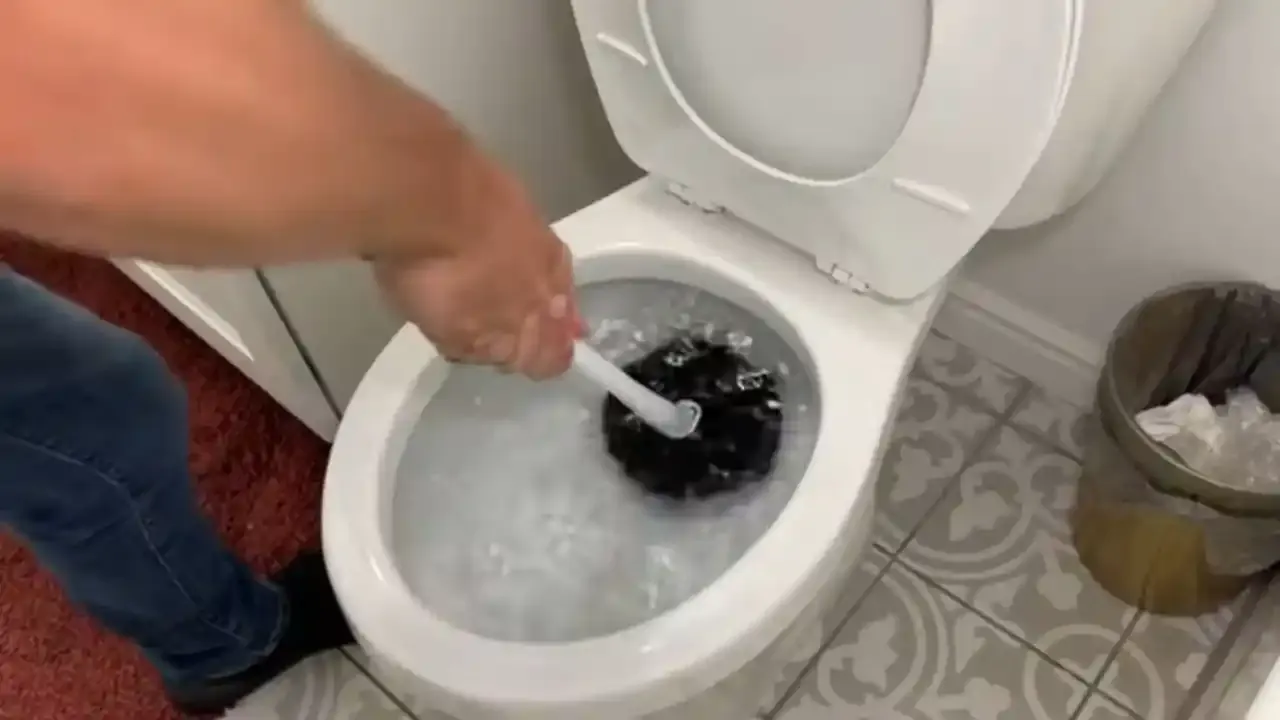
A toilet plunger, the kind with a flange on the cup, is built for this. A flat sink plunger does not seal the toilet outlet as well. Use enough water in the bowl to cover the cup, but do not add so much that it spills.
Set the seal
Push the cup down over the drain opening so the flange sits inside the hole.
Plunge slowly first
Press down gently to push air out, then pull back sharply. The pull does most of the work.
Repeat in a steady rhythm
Make 10 to 15 strokes, then break the seal and see if the water drops.
Flush only when the water falls
If the bowl drains quickly, add a flush to test. If it rises, stop and let it settle.
Hot water and dish soap, done safely
For a clog of paper or soft waste, hot tap water and a squirt of dish soap can help. The soap lubricates the pipe wall, and the warmth softens the blockage. Pour it from about waist height and let it sit for ten to fifteen minutes before plunging again.
Use hot water from the tap, not boiling water. Boiling water can crack a porcelain bowl, and it can soften plastic drain parts. If the bowl is close to the rim, wait for it to drop before you add anything.
What not to pour or push down
Hardware-store drain chemicals are the biggest temptation, and they are the biggest risk. They can sit in a stopped toilet and splash onto skin when you plunge. They can also damage old pipes and make the job unsafe for the plumber who comes next.
- Drain openers: leave caustic cleaners out of a stopped toilet, and tell the plumber if you used one.
- Mixed cleaners: never combine bleach, ammonia, and other cleaners in the bowl.
- Wire coat hangers: they scratch porcelain and can push the clog deeper.
- Wipes and feminine products: even those marked flushable do not break down like paper.
- Repeated flushing: each flush adds water that may overflow onto the floor.
When one toilet is not the whole story
A single toilet that clogs once is usually a toilet problem. These patterns suggest the clog is farther down the line:
| What you notice | Likely location | Next step |
|---|---|---|
| One toilet, slow flush, plunger clears it | Trap or short branch | Keep plunging, check what went down |
| Toilet clogs again within days | Partial blockage past the trap | Snaking by a plumber |
| Gurgling when a sink or shower drains | Shared branch or vent | Have the drain line inspected |
| Water backs up in a tub when you flush | Main line blockage | Stop using water and call |
| Several toilets and drains slow at once | Main sewer line | Cleaning or camera inspection |
If the lowest drain in the house backs up, stop running water. That includes washing machines and dishwashers, because every gallon has nowhere to go. A plumber can use drain cleaning for a branch line, and sewer line cleaning when the blockage sits in the main.
What to do while the water is still rising
If the bowl is close to overflowing, lift the tank lid and push the flapper down, or close the supply valve behind the toilet. That stops more water from entering. Once the level settles, sponge out the extra water so you can plunge without a splash. Lay towels around the base, and keep children and pets out of the bathroom until it is cleaned up.
Pricing for a clog depends on whether the blockage is in the toilet or the line behind it, what tools are needed, and how easy the access is. A good quote tells you which, and what is included. To describe the problem and get a clear price before work starts, call (770) 214-4545.
Standard homeowners policies generally cover sudden accidental damage and not routine clogs, and policies differ, so check yours. The service covers ZIP codes 30214 and 30215 in Fayetteville.
What this means in Fayetteville
Fayette County lists the City of Fayetteville Water and Sewerage Authority as the sewer provider for Fayetteville homes. That tells you the home is on city sewer rather than a septic tank, so a backed-up main means a blockage in your lateral or the public line, not a full septic tank.
For the homeowner, the practical step is simple. If several fixtures back up together, call a plumber first to find out whether the blockage is on your side. If it is in the public line, the plumber will tell you who to contact. Neighbors in Peachtree City have a different sewer authority, so the contact would differ there.
Plunger did nothing and the bowl is rising?
Shut off the supply valve behind the toilet and let a licensed plumber find the blockage.
More questions answered
Twenty to thirty minutes is plenty if you try it. If the water level has not dropped by then, the clog is too solid for the fizz. Go to the plunger.
A closet auger, made for toilets, is safe and has a protective sleeve. A regular drain snake can scratch the bowl. If an auger does not clear it, a plumber with the right tools should take over.
Not by itself, but an overflow is. If water is spilling or the whole house is backing up, close the toilet supply valve, stop using water, and call dispatch, which is open 24/7.
Common reasons are too much paper, flushing items that do not dissolve, a weak flush, or a partial blockage deeper in the drain. Repeat clogs in the same toilet usually point to something past the trap.
A clog does not, but chemicals, boiling water, and hard prying can. A cracked bowl or a damaged flange turns a small clog into a replacement.
The location of the blockage, the tools needed, access to the toilet or cleanout, and how long it takes. Call (770) 214-4545 for a clear price before work starts.
Not for a single clog, where a plunger is still the first step. It matters when several fixtures back up, because the blockage can be in your lateral or the public line. A plumber can find where it is and tell you who to call.
Sources and standards. Toilet clog advice follows manufacturer guidelines and the warnings printed on cleaner labels. Poison control centers advise against mixing household cleaning products.