
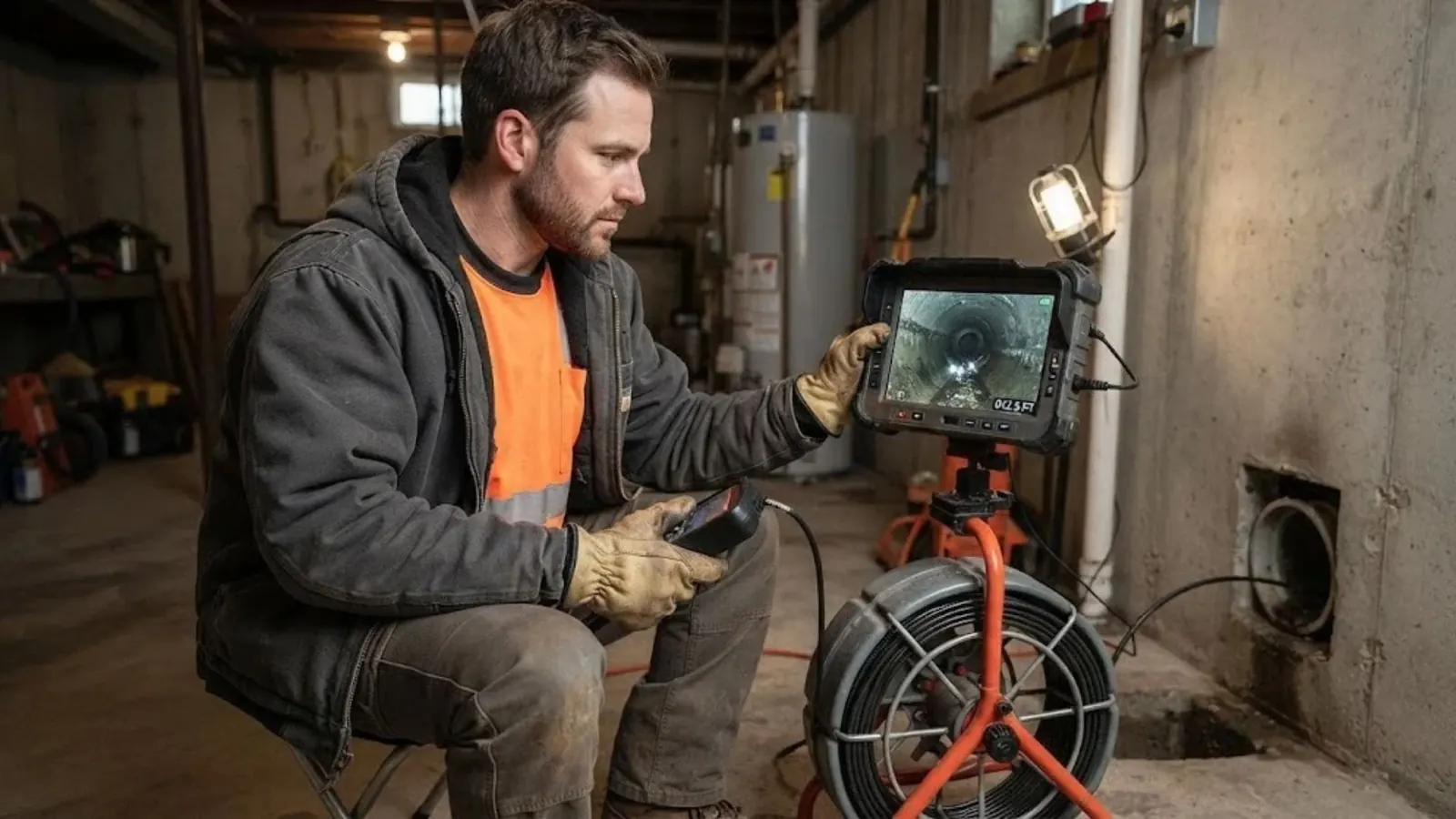
A sewer camera inspection in Fayetteville, GA sends a small waterproof camera through your drain line so a plumber can see the pipe from the inside, with a recording you can keep.
It answers a plain question: what is actually wrong, where is it, and how bad is it. Fayetteville 24/7 Plumbing schedules inspections for home purchases, repeat clogs, and slow drains, and same-day appointments are available when the schedule allows.
The camera does not fix anything. What it does is replace guessing with footage, so you only pay for the repair the pipe really needs.
Buying a house: look at the sewer line before closing
A standard home inspection does not see inside a buried sewer line. A problem there can mean a large repair bill, and it often surfaces after the move-in boxes are unpacked. A camera run during your due diligence window gives you a recording to use when you negotiate repairs or a credit, or to walk away.
Newer does not mean clear. Much of the housing around Fayetteville grew up in the 1990s and 2000s, so many lines are now decades old, and even recent builds can have a sag or a crushed section from construction. Ask the seller for access to the cleanout and arrange the visit early, before the inspection window closes.
What shows up on the footage
| What you see | What it usually means | Likely next step |
|---|---|---|
| Fine hair-like roots at a joint | Early root intrusion | Cleaning now, watch the joint |
| A thick root mass blocking the view | Established roots through a gap | Cutting, then repair of the joint |
| Standing water in a low stretch | A belly or sag in the pipe | Excavation if the sag is deep |
| A crack or missing piece | Broken or damaged pipe | Spot repair or lining |
| Flaking, scaled walls | Corroded older pipe | Replacement planning |
| Grease and debris coating | Buildup, not pipe damage | Cleaning or hydro jetting |
How an inspection visit works
The technician opens a cleanout, or removes a toilet if there is none, and feeds a flexible cable with a lit camera head into the line. The image shows on a monitor as the camera moves. Some units send a locator signal, so the plumber can trace the exact spot above ground.
A heavily blocked line may need cleaning first, because the lens cannot see through sewage or a root mass. If that happens, the plumber will tell you why and may suggest sewer line cleaning before the run. You can watch the screen and ask questions as it goes.
Locating the line and pinpointing a problem
Many older owners do not know where their sewer line runs. A locator can trace it from above, which matters before any digging. Marking the depth and the distance from the house tells you what a repair will involve, whether that is a short trench or a long run under a driveway.
Call 811 before any excavation so buried utilities are marked. If the camera shows damage, permit rules vary, so ask the Fayetteville building department before pipe work starts. In ZIP codes 30214 and 30215, that conversation happens before a shovel touches the ground.
How findings are graded
A plain way to read the results
Minor means the pipe is sound and needs only cleaning or watching. Moderate means a defect exists, such as roots at a joint or a small crack, and a repair should be planned. Major means a collapse, a deep sag, or a broken length that needs excavation or replacement soon.
Ask the plumber to show you the clip behind each grade. A good grading names the distance from the cleanout and shows what the camera saw, so you can compare it with a second opinion.
If the footage shows a defect, sewer line repair options range from a short spot fix to full replacement, and the recording helps you compare quotes.
Getting ready for the visit
- Find the cleanout: tell the plumber where it is, or say that you cannot find one.
- Clear the way: move bikes, planters, and boxes from the access spot.
- Share the history: mention repeat clogs, gurgling, or lawn soft spots.
- Hold off on water use: avoid running laundry or long showers during the run.
- Ask for the recording: request a copy of the video and a short written summary.
If you are selling, a clean report can help the listing. If you are staying, it gives you a baseline to compare against later.
Limits, price, and insurance
A camera sees what it can reach. It cannot see past a full blockage, a severe belly full of water, or a pipe too small for the head. It also does not test for leaks that only show under pressure. The plumber should say what the run did not cover.
Price depends on line length, access, whether the line needs cleaning first, whether tracing is included, and whether you want a written report.
Homeowners policies generally respond to sudden accidental damage, not to wear or the cost of an inspection, and policies differ, so check yours. For a clear price before work starts, call (770) 214-4545. A drain that clogs now and then may only need drain cleaning.
See your sewer line before you commit
Schedule a recorded camera run and get a plain read on the pipe.
Sewer Camera Inspection questions from Fayetteville homeowners
It is a smart step, especially for a house that is decades old. A standard home inspection does not look inside the buried line. The recording can support a repair request or a price talk.
Yes, if the unit has a locator. The plumber traces the signal from above ground and marks the line and its depth. You should still call 811 before anyone digs.
Ask for it when you book. A recording lets you compare repair quotes and keeps a record of the pipe condition. The plumber can also write a short summary of what the footage shows.
Only if there is no cleanout. A cleanout is easier and cleaner. If the plumber must pull a toilet, they will reset it afterward.
A blockage, a collapse, or a very tight bend can stop it. The plumber may clean the line and try again, or explain that the stopping point is itself the finding.
It depends on material, soil, and use, so no single number is reliable. The camera footage tells you more about your pipe than its age does.
Line length, access, whether cleaning is needed first, whether tracing or a written report is included, and the time of the visit. Ask what is covered before work starts. Call (770) 214-4545 to book one.
Sources and standards. Defect grading here follows how inspectors code findings under NASSCO's Pipeline Assessment Certification Program (PACP), a widely used standard for sewer pipe condition. Ask for the recording and the written findings from any inspection.