
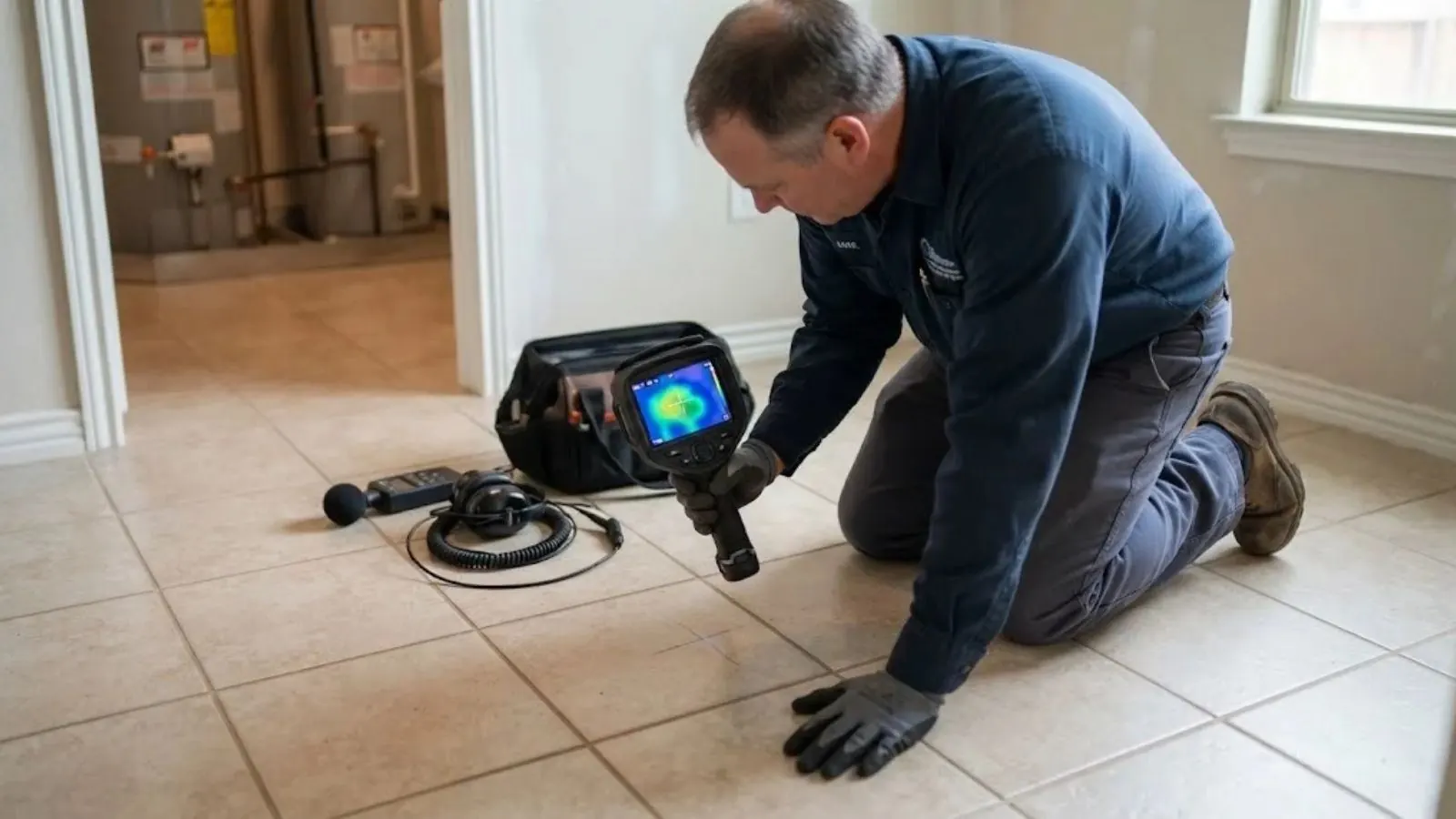
Leak detection in Fayetteville, GA is the work of finding where water is escaping when you cannot see it. A hidden leak can soak a ceiling, a wall cavity, a crawlspace or the ground under your yard.
Our dispatch line is open 24/7. While you wait for the plumber, shut off the main valve if water is actively spilling, and move electronics and rugs away from the wet area.
Most hidden leaks give hints long before a puddle appears. A bill that keeps climbing, a meter that moves when nothing is running, a soft spot on a wall or a musty smell under the house all count. This page explains how to read those hints and how the search is done.
The meter keeps moving and the bill keeps growing
A water bill that creeps up with no change in how your household lives is the most common first clue. The cleanest check is the meter itself, usually in a box near the street or property line.
Stop all use
Turn off every faucet, the dishwasher and the washing machine. Make sure the ice maker is not filling.
Read the meter
Open the lid and look at the small leak indicator or the sweep hand. Note where it sits.
Wait and compare
Check again after about 30 minutes. Movement with everything off means water is leaving the system somewhere.
Close the main and recheck
Shut the main valve at the house. If the meter stops, the leak is inside. If it keeps moving, the leak is on the line between the meter and the house.
That last step tells the technician which half of the property to search first. A silently running toilet causes the same pattern, so lift the tank lid and look before assuming the worst.
A stain, bubble or drip on a ceiling or wall
Water on drywall is already past the early stage, so stop the supply first. Close the main shutoff, then open a low faucet to drain the pipes. If a ceiling is sagging, stay out from under it. The 24/7 line is the right number when water is moving through a ceiling at night.
Not every stain is a plumbing leak. Roof leaks, air conditioner drain pans and sweating ducts look the same. Stains that grow only after rain point toward the roof. Stains that grow on a dry day point toward supply or drain pipes.
- Ceiling stain under a bathroom: often a supply line, a drain joint or a shower pan.
- Wall that feels cool and damp: a pinhole in a supply pipe behind the drywall.
- Paint bubbling near the baseboard: a slow leak at a fitting or a tub valve.
- Water only when a fixture is used: usually a drain or trap leak.
How a technician finds a leak without tearing things open
Good detection starts with questions and a pressure test, then moves to tools that confirm the spot. The aim is one small, accurate opening instead of a guess that costs half a wall.
| Method | Best for | Honest limit |
|---|---|---|
| Pressure test | Telling whether a supply line holds pressure | Shows a leak exists, not where |
| Acoustic listening | Pressurized pipes under floors and soil | Loud background noise can mask the sound |
| Thermal camera | Hot lines and wet drywall behind a finished wall | Cold lines show up poorly |
| Tracer gas | Small leaks other tools cannot pinpoint | Line must be isolated and drained first |
| Drain camera | Drain lines leaking into soil or crawlspace | Cannot see through a full pipe |
Damp crawlspaces and the ground under the house
Leaks under a house go unnoticed for months because nobody looks there. Clues include a musty odor in the rooms above, soft or cold floors, and insulation that hangs wet. Standing water after a dry week usually means a pipe is leaking.
Piedmont clay holds moisture and drains slowly, so a small leak can keep soil soggy and hide where the water began. That is why a technician traces the pipes instead of following the wet ground. Do not crawl under a house where water pools near wiring. Shut off the main and let the plumber go in.
Wet spots in the yard and leaking irrigation lines
A lawn patch that stays soft in a dry spell, a low spot that fills with water or a sudden pressure dip can point to a buried line. If the line needs digging, call 811 first so buried utilities are marked. The repair itself falls under water service line repair.
Irrigation systems leak too. A zone that never dries, a weak sprinkler head or a valve box full of water are common signs. Turn the controller off and watch the meter. If it calms down, the sprinklers were the cause. Homes in 30214 and 30215 can have detection done for any of these yard problems.
A short note on pool and spa leaks
Pools lose water to evaporation, so a drop alone proves nothing. Mark the water level, run the pump normally and compare. If the level falls much faster than the weather explains, the leak may be in the skimmer or the plumbing lines to the equipment. Pressure testing can check those lines. Shell cracks are usually a job for a pool specialist.
Cost factors, insurance and the repair that follows
Price depends on how hard the leak is to reach and how many methods the search needs. A leak behind an access panel is a different job from one under finished tile. Pipe age, material and permit needs also matter. A good quote lists detection and repair separately. For a clear price on your own situation, call (770) 214-4545.
Homeowners policies generally respond to sudden accidental water damage. They usually do not cover wear and tear or the repair of the failed pipe itself, and policies differ, so check yours. Keep photos and water bills. If a pipe split open, see burst pipe repair. If the evidence points to the floor, slab leak repair covers the options.
Water showing up where it should not?
Tell dispatch what you see at the meter or on the wall so the plumber can plan the right search.
Leak Detection questions from Fayetteville homeowners
Watch for a bill that rises for no reason, a meter that moves with everything off, a musty smell or a stain that keeps growing. Any one of these is worth a meter test. If the meter moves, call a plumber before the damage spreads.
Yes. Turn everything off, note the meter reading, wait, and compare. Then close the main and recheck to see whether the leak is inside or on the yard line.
Yes. Dispatch runs 24/7, and same-day appointments are available when the schedule allows. Shut off the main valve, keep power off to any wet area you can reach safely, and call (770) 214-4545 while you wait.
Often only one small opening is needed, because listening tools and thermal cameras narrow the search. A leak behind tile or cabinets may need a bigger opening, and the plumber should tell you that before cutting.
Access to the pipe, the number of methods needed, the pipe material and any repair or permit that follows. A quote should separate the search from the fix. Call (770) 214-4545 for a clear price before work begins.
Yes. Clay drains slowly, so water can sit or travel along a pipe trench before it surfaces. The soggy spot is often not where the leak is, so detection tools beat digging where it looks wet.
It depends on the policy. Many cover sudden damage but not slow seepage, and almost none pay to fix the leaking pipe. Ask your insurer before work starts and keep the plumber's written findings.
Sources and standards. The meter test described here matches leak-check advice from WaterSense, the EPA's water efficiency program. For coverage questions, the terms and exclusions in your own policy decide what is paid, according to the insurer.