Sewer line cleaning in Fayetteville, GA clears the main pipe that leaves your house and carries every drain to the city sewer. When that pipe is blocked, the lowest drains fill first and sewage can rise into a tub or shower.
Fayetteville 24/7 Plumbing answers the dispatch line around the clock, so if water is coming up, stop using every fixture, keep people out of the wet room, and call while you wait for the technician.
A main line is bigger than a sink branch, so it takes bigger tools. This page covers where the cleanout is, what a visit involves, and what keeps clogging the line in the first place.
Find your cleanout before the line backs up
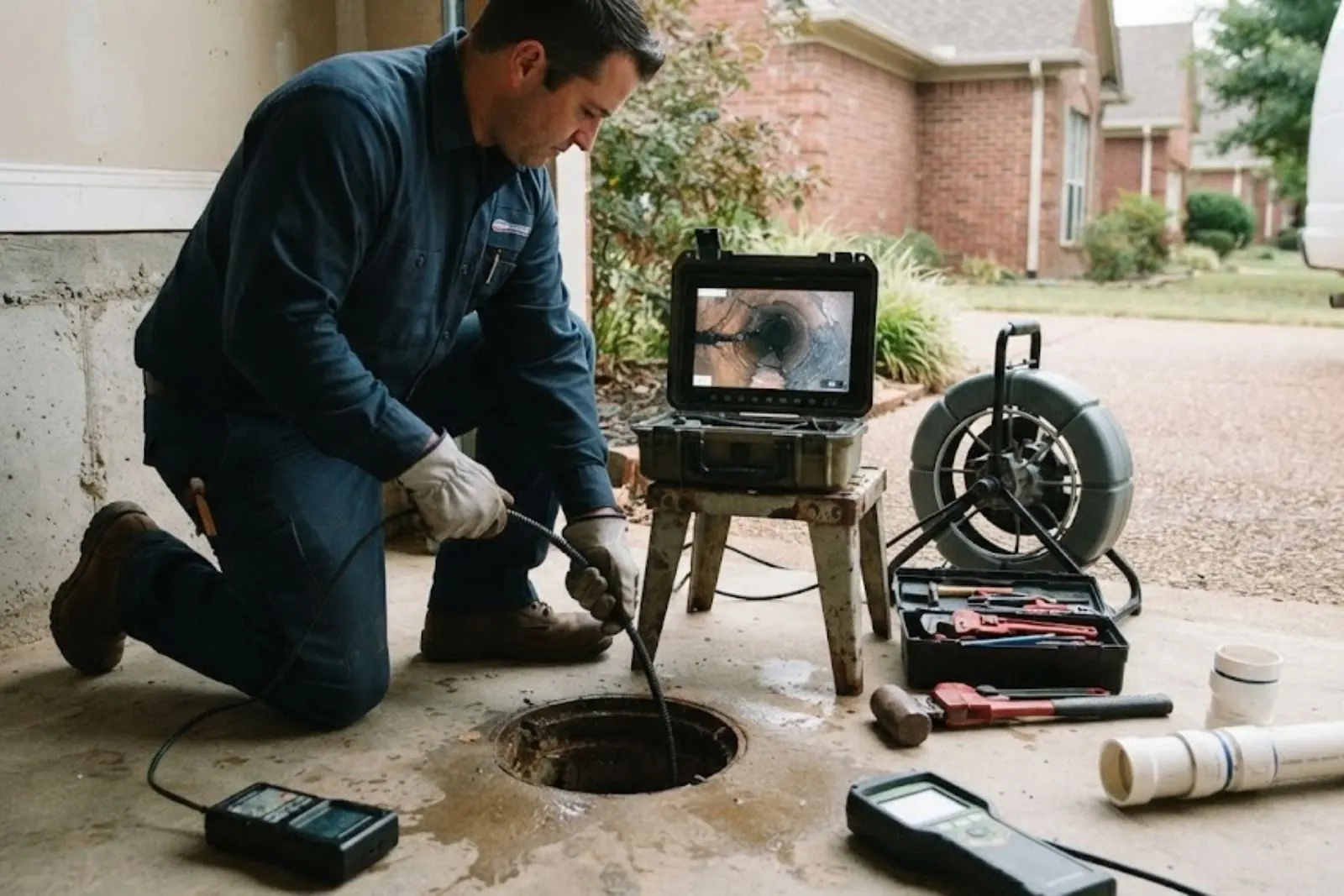
A cleanout is a capped pipe that gives a plumber direct access to the main line. Knowing where it is saves time when the line fails, and it lets the technician work from outside the house instead of pulling a toilet.
- Along the foundation: a short capped pipe sticking up from the ground near the house wall.
- In the yard: a round or square cap flush with the lawn, often between the house and the street.
- In the garage or basement: a threaded cap on a pipe near the floor.
- Near the main stack: inside the house where the large vertical drain meets the floor.
Do not open a cap during a backup unless the plumber asks you to. Pressure behind it can push sewage out fast. If you cannot find a cleanout, tell dispatch. Some homes have none, and that is a useful thing to know before a repair.
Sewage rising from the lowest drain in the house
Water coming up through a floor drain, tub, or ground-level shower is the standard sign that the main is blocked downstream. Toilets that gurgle or empty slowly add to the picture. The worst thing you can do is keep flushing and running laundry, because that water has nowhere to go but out.
Call call (770) 214-4545 at any hour, including nights and weekends. Tell dispatch which fixture is overflowing and whether a cleanout is accessible. Same-day appointments are available when the schedule allows, and the line stays open when the office is closed.
What a main-line cleaning visit looks like
Confirm the blockage
The technician checks which fixtures are affected and finds the nearest access point.
Open the line
A heavy cable with a cutting head runs through the cleanout or a pulled fixture until it breaks through.
Clear the pipe wall
For grease or scale, the plumber may follow with hydro jetting to wash the pipe clean.
Test the flow
Water runs through the line to confirm it drains and holds.
Look, if needed
If the cable hits something solid, a camera shows whether it is roots, a belly, or a break.
Cleaning restores flow. It does not repair a damaged pipe, and a good plumber will tell you if the camera shows a defect that cleaning will not fix.
Main line, branch line, or storm drain
The word drain covers several different systems, and the right fix depends on which one you have. The table separates them.
| System | What it carries | Who handles it |
|---|---|---|
| Main sewer line | All household waste to the city sewer | Plumber, from the house to the public tap |
| Branch drain | One sink, tub, or bathroom group | Plumber, usually with a smaller cable. See drain cleaning |
| Yard or downspout drain | Rainwater from gutters and low spots | Cleaned only if you have a buried drain on your property |
| Street storm drain | Rainwater from the road | The city, not a private plumber |
| Public sewer main | Waste from many houses | The sewer authority, not you |
Storm drains and sewer pipes must stay separate. Do not send roof or yard water into a sanitary line. If a yard drain is slow after rain, that is a drainage problem to describe to the plumber, not a sewer backup.
What keeps filling the line
Wipes top the list. Labels such as flushable do not mean they break down, and they catch on roots and rough joints and build a mat. Paper towels, feminine products, dental floss, and cotton swabs do the same. Grease from the kitchen coats the pipe over months and traps all of it.
Roots are the other big cause. They enter through small gaps and thicken into a net that catches paper. Cutting them clears the pipe for now, and a camera shows whether a joint needs a repair so they do not return. When the cleaning keeps working only for a short time, sewer line repair may be the real fix.
When the problem is in the street
If your neighbors have the same backup, or the cleaning reaches the street and the line is still full, the blockage may be in the public main. The City of Fayetteville Water and Sewerage Authority runs Fayetteville sewer. A plumber can show you the point where your pipe meets the main so you know whether to contact the authority.
In ZIP codes 30214 and 30215, that check matters, because paying a private plumber to clear a public main wastes time and money.
Price, insurance, and a sensible next step
Cost depends on the line length, the equipment, whether a cleanout exists, how heavy the buildup is, and the hour of the call. A clear price comes before work starts, and a good quote says whether a camera run is part of it.
Homeowners policies generally respond to sudden accidental damage, not to routine cleaning or the repair of a worn pipe, and policies differ, so check yours. For a price on your line, call (770) 214-4545.
Main line full and rising?
Stop the water and call the 24/7 line to get the blockage cleared.
Sewer Line Cleaning questions from Fayetteville homeowners
Yes. The dispatch line at (770) 214-4545 is open 24/7. Stop water use, tell dispatch what is overflowing, and keep away from the wet area until the technician arrives.
Try the other drains. If more than one is slow or gurgling, especially the lowest tub or shower, suspect the main. One slow sink is almost always local.
A small cable will not reach a main line well, and rental machines can jam or injure you. Opening a cleanout also risks sewage splash. It is safer to leave the main to a trained technician.
No. They hold together in the pipe much longer than toilet paper. Put them in the trash, along with paper towels and similar items.
Not always. It clears what is in the pipe now. If roots, a sag, or a cracked joint caused the clog, the problem returns until that defect is repaired.
If a buried drain is on your property, a plumber can clean it. The storm drain in the street belongs to the city.
Line length, equipment, access through a cleanout, how heavy the blockage is, and whether it is an after-hours visit. Ask for the method and the scope before starting. Call (770) 214-4545 for a price on your line.
Sources and standards. Cable and jetter makers publish equipment guidelines, and Georgia's plumbing code, based on the International Plumbing Code (IPC), sets expectations for cleanout access. Call 811 before any digging near the line.