
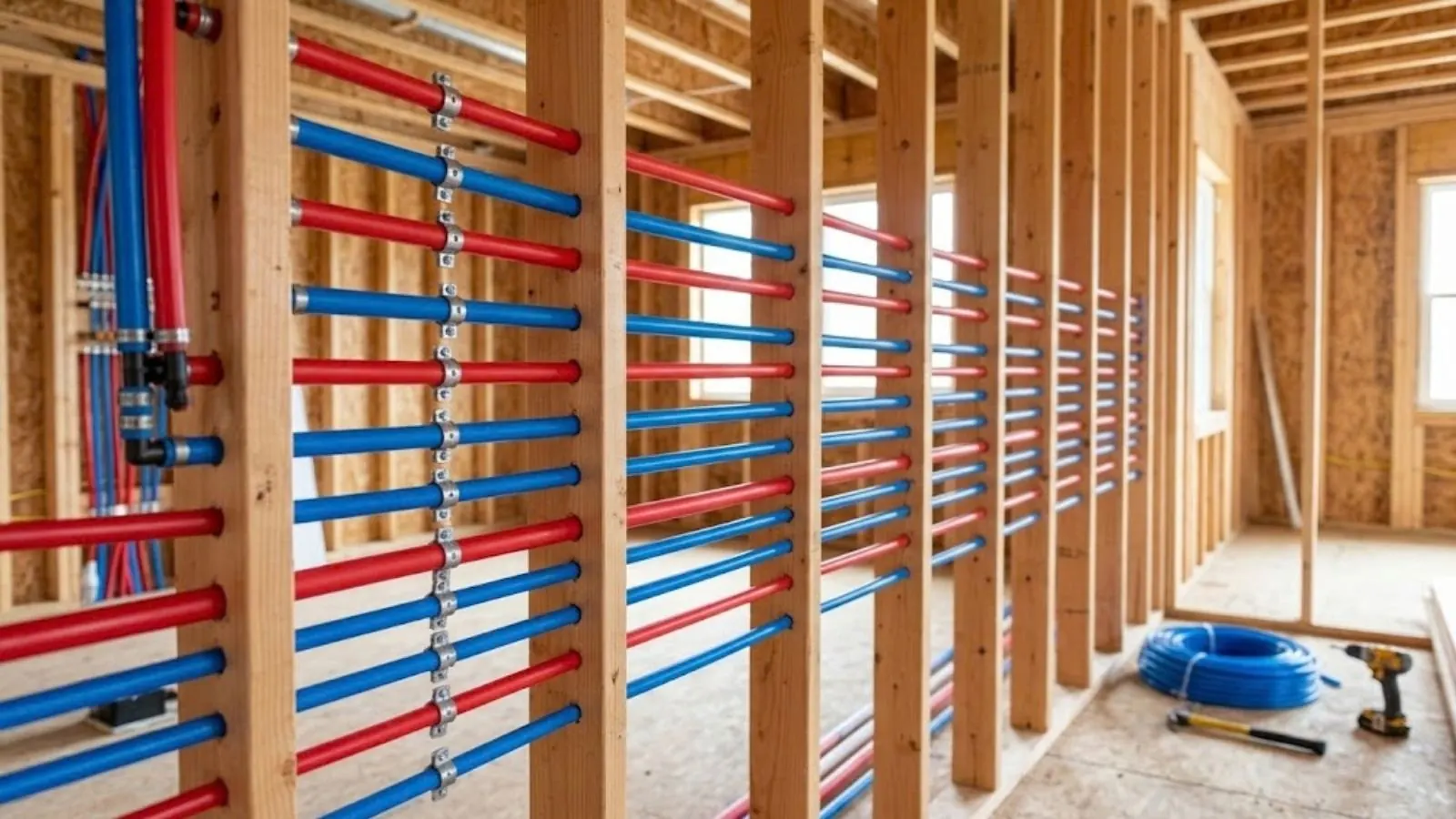
Repiping means replacing the supply pipes that carry water through your house, either the whole system or a defined part of it.
In Fayetteville, GA it is a planned project, usually chosen after repeated leaks, discolored water or weak flow from worn pipe. You can schedule it on your timeline, and this page explains how to decide, what the work involves and what to ask before you sign.
Not every old house needs new pipes, and not every leak means the whole system is failing. The goal is to match the scope of work to the real condition of your plumbing.
What worn-out pipe looks like in daily life
Pipes rarely fail all at once. They give clues first, and these are easiest to spot when you compare rooms.
- Rusty or brown water that clears slowly: often corrosion inside older steel pipe.
- Weak flow at several fixtures: mineral or rust buildup narrowing the pipe.
- Pinhole leaks that keep coming back: a sign the metal is thinning along its length.
- Green crusting or stains on exposed copper: outside corrosion at joints and bends.
- Water that tastes or smells metallic: worth testing, and worth tracing to its source.
A single repaired leak does not make a repipe. Three leaks in a year, in different places, tells a different story.
Choosing between copper and PEX
| Material | Best for | Trade-off |
|---|---|---|
| Copper | Homes where rigid, long-lasting metal pipe is preferred | More labor to install, and material cost can swing |
| PEX | Whole-house repipes that need fewer wall openings | Not for outdoor sun exposure, and needs correct fittings |
| CPVC | Some cold and hot supply runs where allowed | More brittle with age, so less common for full repipes |
PEX bends around corners and can be fed through walls with smaller openings, which often means less drywall repair. Copper has a long record and handles heat well. Water chemistry can affect both. The local utility has not published a hardness figure in its water quality report, so test your tap and ask the utility for its annual Consumer Confidence Report before deciding.
A few repairs or the whole house?
The honest question is how much of the system is truly failing. If one section is bad and the rest is sound, a targeted replacement saves money and disruption. If the same material fails everywhere, replacing piecemeal means opening walls again and again.
Phased repiping is another option. The plumber replaces the worst section first, such as a bathroom group or an attic run, and returns for the rest later. This spreads cost and disruption but means more visits. Ask for each phase to be priced separately so you can compare it with a single project.
If a pipe is leaking right now and you need it stopped, see burst pipe repair. If you only need to find an unseen leak, leak detection may answer the question before you commit to a bigger job. If you are remodeling a bathroom or kitchen anyway, plumbing installation work can often be planned alongside it.
How a whole-house repipe gets done
Walk-through and plan
The plumber inspects the current pipe, notes the fixtures and maps new routes.
Set up and shut down
Floors are protected, the main is closed and old lines are drained.
Open the access points
Small openings are cut in drywall, closets or the attic to feed new pipe.
Run and connect new lines
New supply pipe is run to each fixture and connected to the water heater and main.
Pressure test and inspect
The system is tested for leaks, and the inspection is arranged where required.
Most homeowners ask how long they will be without water. It depends on the size of the house and the scope, so ask the plumber for a plan, including when water will be on in the evenings.
Living with walls opened up
Repiping means holes in drywall. A careful crew keeps them small, protects floors and cleans up daily. The patches are rough when the plumbing work is finished, and drywall finishing and paint are usually a separate trade. Ask in advance whether finishing is part of the quote or something you arrange yourself.
Much of the local housing stock grew up in the 1990s and 2000s. Homes of that age often have a mix of pipe types, and pipe condition varies by material, not just by year. A plumber who inspects before quoting gives you a better answer than any age chart. Homes in 30214 and 30215 deserve the same close look.
Permits, licensing and who should do the work
Permit rules vary, so ask the Fayetteville building department before pipe rerouting or a whole-house repipe. Ask the plumber whether they pull the permit and schedule the inspection.
You can also verify a plumber yourself. Georgia plumbers are licensed through the State Division of Master and Journeyman Plumbers, and the Secretary of State website has an online Licensee Search. Take a minute to look up the name on the quote. Confirm that the plumber is licensed and insured before work begins.
Planning the cost of a repipe
The price of a repipe depends on the number of fixtures, the size and layout of the house, the pipe material, how many walls must open, whether the house has one story or two, and permit and inspection needs. A good quote lists materials, labor, wall repair and cleanup as separate lines. For a clear price before work starts, call (770) 214-4545.
Insurance usually will not pay to replace pipe that is simply old. Policies generally respond to sudden accidental damage, not wear and tear, and they differ, so check yours. If a leak has already damaged the house, the damage may be treated differently from the pipe replacement itself.
Ready to plan new pipes?
Call to talk through your home, your options and a schedule that fits.
Repiping questions from Fayetteville homeowners
Repeated leaks in different places, rusty water and weak flow at many fixtures are the main signs. A plumber can inspect the pipe and tell you whether it is wearing out or whether a repair will do.
Usually yes, though water will be off for part of each day. The plumber can plan the work so water is restored in the evening. Ask for the schedule before work starts.
Both work well when installed correctly. PEX is flexible and usually means fewer wall openings. Copper is rigid and has a long track record. The best choice depends on your house and budget.
Number of fixtures, house size and layout, pipe material, wall access, permits and inspections. A good quote itemizes each. Call (770) 214-4545 for a clear price before work begins.
Permit rules vary, so ask the Fayetteville building department before pipe rerouting. The plumber can tell you whether a permit and inspection apply.
Yes. A phased repipe replaces the worst section first and the rest later. The trade-off is more visits and some repeated disruption.
It depends on the size of the house, the material and how many walls must open. A plumber can give a realistic schedule after seeing the home.
Sources and standards. Georgia's plumbing code is based on the International Plumbing Code (IPC). PEX and copper that carry drinking water should be certified to NSF/ANSI 61, and fittings follow published standards such as ASTM F1960 for cold-expansion PEX fittings.