A backed-up sink or tub in the middle of the night is stressful, and the Fayetteville 24/7 Plumbing line is open around the clock for exactly that.
While you wait, stop running water into the blocked drain, keep kids and pets away from any standing water, and move rugs and cardboard off the floor. Drain cleaning in Fayetteville, GA means a licensed plumber clears the blockage from the pipe itself and checks that water now leaves freely.
Most clogs are soap, hair, grease, food scraps, or wipes packed into one spot. A good visit removes the clog, finds out why it formed, and tells you plainly if the real problem sits deeper in the line.
Which drain symptom points to which kind of clog
Where the water misbehaves tells you a lot. One slow fixture usually means a local clog. Several slow fixtures at once point further down the line. Use the table as a rough guide before you decide how fast you need help.
| What you notice | Likely cause | Usual fix |
|---|---|---|
| Bathroom sink drains slowly, tub is fine | Hair and soap film in the trap or stopper area | Clean the stopper, then cable the branch line if it returns |
| Tub or shower water pools around your ankles | Hair mass below the drain opening | Pull the strainer, then cable the tub line |
| Kitchen sink gurgles and holds water | Grease and food buildup past the trap | Cable the kitchen branch, jet if grease is heavy |
| Toilet gurgles when the washer drains | Partial blockage in the main line | Camera and main-line cleaning |
| Every drain is slow, one clears and another rises | Main line restriction | Main-line cleaning and a cleanout check |
Water rising in a tub, floor drain, or sink right now
A drain that backs up instead of draining is an emergency, especially if water is reaching the floor or sewage smell fills the room. Stop using every fixture in the house. Do not run the dishwasher or washing machine, and do not flush. Every gallon you add has to go somewhere, and right now it is coming up through the lowest opening.
Call call (770) 214-4545 and tell dispatch which fixtures are affected. That detail helps the technician bring the right cable and decide whether the problem is a branch drain or the main line. Night and weekend calls reach the same dispatch line, and same-day appointments are offered when available.
The kitchen sink is its own problem
Kitchen lines clog differently from bathroom lines. Cooking fat goes down hot and liquid, then cools on the pipe wall and catches rice, coffee grounds, and eggshell. Over months the opening narrows until the sink drains like a straw. Hot water and dish soap move the problem a few feet down the pipe. They rarely remove it.
A technician usually opens the trap first, then runs a cable through the horizontal run behind the wall. If the pipe wall is coated with grease the cable only punches a small hole through it. In that case a hydro jetting pass scours the full pipe diameter, which is why the drain stays open longer.
Cable, auger, or something stronger
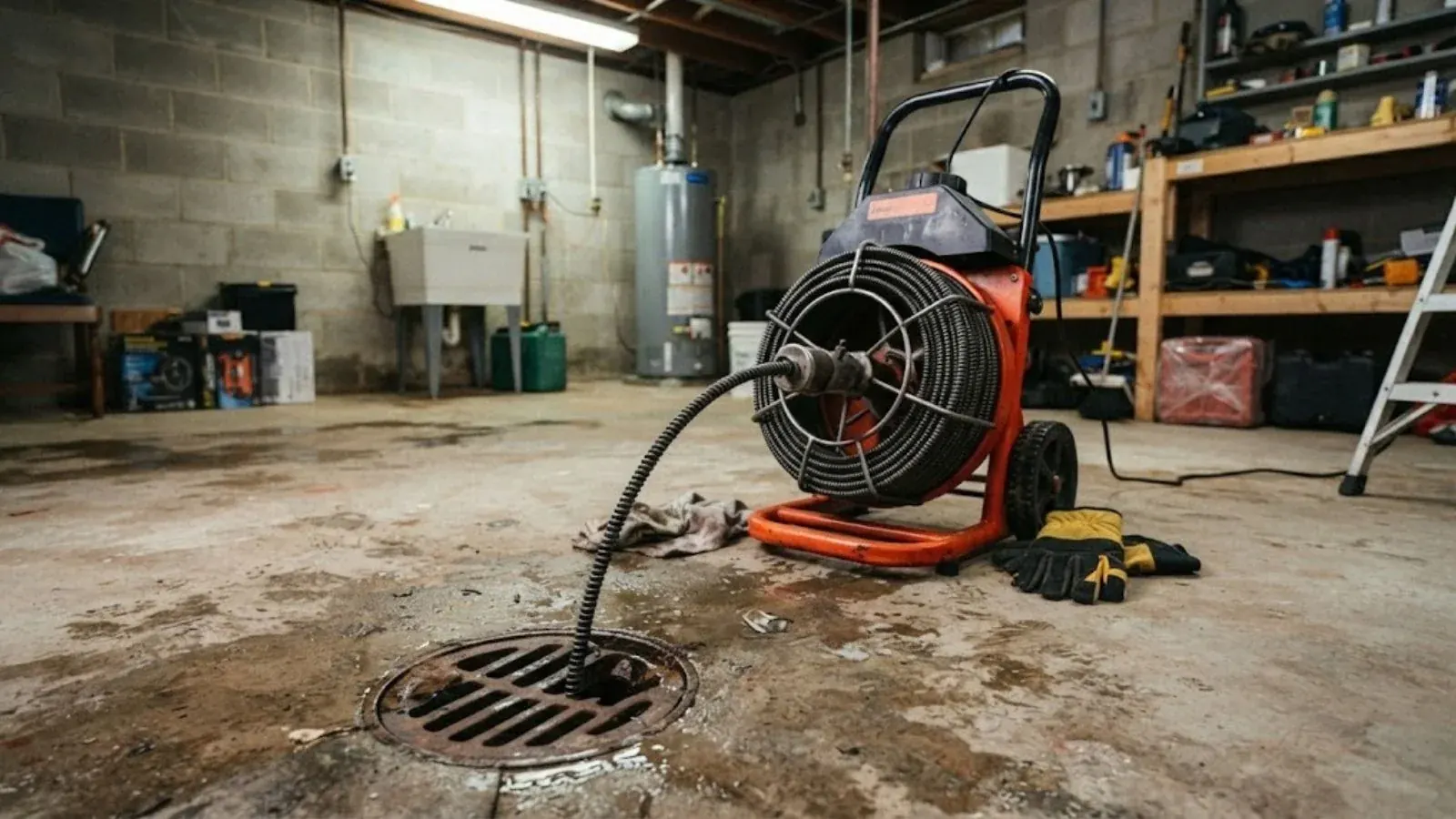
A hand auger works on a clog close to the drain opening. A motorized cable reaches farther and cuts through hair, paper, and soft roots. For a stubborn buildup the plumber may switch to a jetting nozzle, which is a different job with its own page. For a main-line backup, sewer line cleaning covers the larger equipment and cleanout access.
Chemical drain openers are the one thing to skip. They sit in a standing clog, can damage older pipe and finishes, and leave caustic water that is unsafe for the technician to work in. If you already poured some in, tell the plumber when they arrive.
What you can safely do before the plumber arrives
- Stop the flow: turn off the dishwasher and washer and hold off on showers.
- Try a plunger: use a cup plunger on sinks and a flange plunger on toilets, with a good seal and steady strokes.
- Clear the stopper: lift out the tub or sink stopper and pull visible hair by hand with gloves.
- Open the cleanout cap only if you know where it is: stand to the side and be ready for water, or leave it for the plumber.
- Clear the area: move rugs, boxes, and electronics away from the wet zone.
If the plunger helps for an hour and the water slows again, the clog is still there. That is a sign the blockage is larger than a plunger can reach.
When the whole house drains badly
A main-line blockage shows up at the lowest fixture first, often a basement or ground-floor shower or tub. Much of the housing around Fayetteville grew up in the 1990s and 2000s, so many lines are now decades old, and roots, sags, and buildup have had time to form. A drain-cleaning visit in ZIP codes 30214 and 30215 often starts with a cleanout check for that reason.
If the cable keeps hitting the same obstruction at the same distance, the pipe may be cracked, sagging, or collapsed. A camera run shows it, and a sewer camera inspection turns guesswork into a recording. Cleaning will not repair a broken pipe. It only buys time.
Drain line leaks and what shapes the bill
A drain line can also leak. Signs include a stain on a ceiling below a bathroom, a musty cabinet floor, or water that appears only after you drain a tub. Leaks like this are repair work, not cleaning, and the plumber will tell you which one you have.
Price depends on how far the clog sits from the access point, which tool the job needs, whether a cleanout exists, and whether the visit is after hours.
A clear price comes before work starts, and a good quote names the tool and the line being cleaned. Homeowners policies generally respond to sudden accidental damage, not to routine clogs or the cleaning itself, and policies differ, so check yours. For a price on your drain, call (770) 214-4545.
Water coming up instead of going down?
Stop running fixtures and reach dispatch any hour for drain clearing.
Drain Cleaning questions from Fayetteville homeowners
That usually means a local clog of hair and soap in the sink trap or the short branch behind the wall. A main-line problem would normally slow more than one fixture. Cleaning the stopper and trap often fixes it, and a cable handles what is left.
Yes. The dispatch line at (770) 214-4545 answers 24/7. Stop using water, tell dispatch which fixtures are backing up, and keep people away from standing water until the technician arrives.
Check more than one drain. If the lowest tub or shower gurgles when you run the washer, or two fixtures back up together, the main line is likely involved. A single slow fixture is almost always local.
Sometimes. A repeat clog at the same spot usually means grease, roots, or a pipe flaw that cleaning only clears for a while. Ask the plumber to look with a camera so you know whether you need jetting or a repair.
For a sink or tub close to the opening, a small hand snake is fine if you go slowly. Do not force it, and stop if it jams. Cheap snakes can scratch pipe and push a clog deeper.
The main factors are how far into the line the blockage sits, the equipment needed, whether a cleanout gives easy access, and whether it is a night or weekend visit. The technician should name the tool and the line before starting. Call (770) 214-4545 to talk through your case.
Sources and standards. Georgia's state minimum plumbing code for drains and vents is based on the International Plumbing Code (IPC), with Georgia amendments. The advice on chemical drain cleaners follows the safety guidelines printed on product labels.