Plumbing installation in Fayetteville, GA means putting new pipes, fixtures and appliances in the right place and connecting them properly. That covers bathroom and kitchen remodels, new fixtures, additions, new construction rough-in, and gas line work. It is planned work, so there is time to compare options, settle the layout, and schedule around your project.
A good installation starts before any pipe is cut. The plumber needs to know where water, drains and vents already run, what the new layout asks of them, and which steps need a permit or an inspection. This page walks through how that planning goes.
Jobs that count as new installation
Installation work is anything that adds or moves plumbing rather than fixing a failure. People most often ask about the following.
- New fixtures: sinks, toilets, tubs, showers, and outdoor spigots in places that had none.
- Remodels: relocating a vanity, adding a second bathroom, or moving a kitchen sink to an island.
- Appliance hookups: dishwashers, ice makers, washing machines, and gas ranges or dryers.
- Additions and new construction: rough-in of supply, drain and vent lines before the walls close.
- Gas piping: new lines to a range, dryer, fireplace, or outdoor grill.
For a failed water heater, see water heater installation instead. For a fixture that already exists and has just stopped working, faucet repair or toilet repair is the closer match.
Gas line work: leave first, plan second
If you smell gas
Leave the building immediately. Do not use light switches, phones, garage door openers or anything that could spark inside. Once you are outside and away, call 911 or the gas utility.
Call a plumber only after the utility says the building is safe. We do not promise a gas-leak response, because the utility and emergency services must act first.
New gas lines are planned work. The plumber checks the load of each appliance, the length of the run, and the pipe size needed to deliver enough gas. Undersized pipe causes weak flames and tripped safety controls, so the sizing step matters. Every new line is pressure tested before it is put into service.
Permit rules vary, so ask the Fayetteville building department before work starts. Check the plumber's license in the Licensee Search on the Georgia Secretary of State site, which covers the Master and Journeyman Plumbers division.
Planning a bathroom or kitchen rough-in
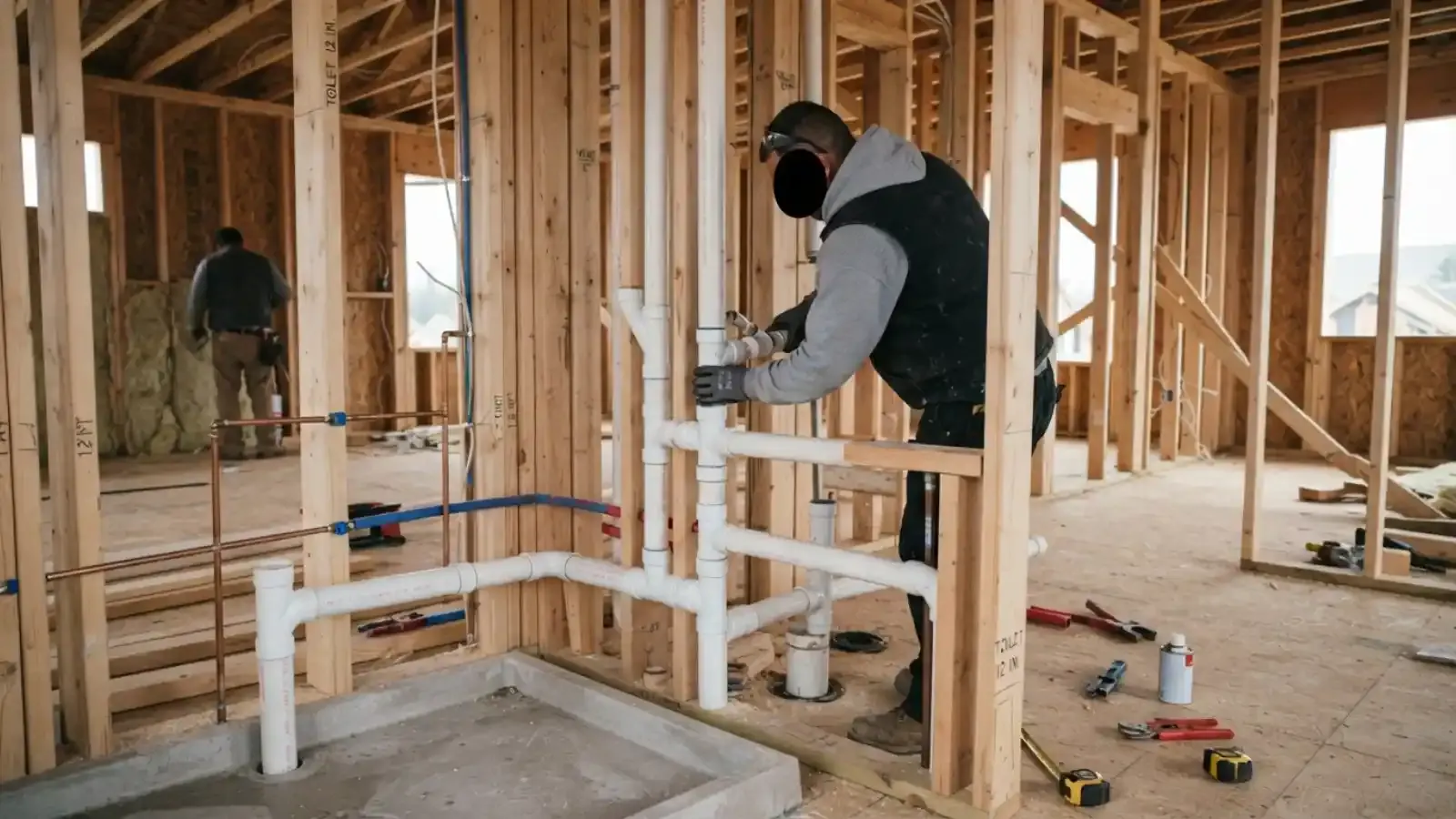
Rough-in is the stage where supply lines, drains and vents go into open walls and floors. Mistakes here are expensive, because tile and cabinets will cover them. Walk through the layout with the plumber before demolition ends and confirm the position of every fixture.
Moving a toilet or a shower drain is harder than moving a sink. Drains need a constant downward slope and a vent, and the floor structure may limit where a new line can run. On a slab, relocating a drain means cutting concrete. On a raised floor, the work is easier but depends on the joists. Tell the plumber early if you want the layout changed.
Bring fixture specs to the table. Rough-in dimensions, valve types and drain sizes differ between models, and the wrong valve behind a finished wall is a costly surprise.
PEX, copper and what goes in the wall
| Material | Good for | Things to weigh |
|---|---|---|
| PEX | Remodels, long runs, tight wall cavities | Flexible, needs proper fittings and support, not for sunlight exposure |
| Copper | Visible lines and spots that need rigid pipe | Rigid, soldered or pressed joints, more labor on long runs |
| CPVC | Hot and cold supply in some layouts | More brittle than PEX, sensitive to heat and fittings |
| PVC or ABS | Drain and vent lines | Not for pressurized supply |
Your plumber will pick materials that suit your project and local code. Georgia's minimum plumbing code is based on the International Plumbing Code with state amendments, and the plumber works to that. Where a whole house is involved, repiping is a related project with its own planning.
New construction and additions
Much of Fayetteville grew in the 1990s and 2000s, and the older plumbing in those houses affects additions. Before you tie a new bathroom into an existing line, the plumber should check the existing drain size, vent path and water pressure at the connection. A camera check of the existing sewer line, described on our sewer camera inspection page, is worth considering before adding load.
Outdoor work brings different questions. Piedmont clay holds water and can shift, so trenches for new water or sewer service need proper bedding and backfill. Call 811 before anyone digs. Marking utility lines first matters, because digging blind risks a severed line.
Permits, inspections and who does the work
Plan review, permits and inspections in the city run through the Fayetteville Building and Inspections office, which uses a contractor for day-to-day work. The city page does not spell out plumbing permit rules, so ask the Fayetteville building department what your project needs before it starts.
Ask the building department which stages need an inspection, and ask your plumber to fit the schedule around them. Keep drywall and tile crews waiting until any required inspection is done.
What drives the cost of an installation
Price depends on how many fixtures are involved, how far lines must run, what the walls and floors are made of, and whether the existing plumbing can support the new load. Fixture quality, gas pipe length and permit work add to it.
A good quote itemizes labor, materials, fixtures and any permit-related steps, so you can compare it fairly. We give a clear price before work starts. To discuss your project, call (770) 214-4545.
Insurance usually does not cover planned upgrades or remodels, because they are not sudden accidents. Policies differ, so check yours if the work follows a loss.
Scheduling and what to have ready
Same-day appointments are available when the schedule allows, but most installs go better with a planning visit first. Have photos, your fixture list and any drawings ready. If your project is in ZIP code 30214 or 30215, we can schedule a plumber to see the space.
Make sure the shutoff valves work before the job. Clear the work area, and tell the plumber about any past leaks or old repairs behind the walls.
Ready to plan your plumbing project?
Call to talk through your layout, fixtures and schedule with a licensed plumber.
Plumbing Installation questions from Fayetteville homeowners
Permit rules vary, so ask the Fayetteville building department before work starts. The plumber can describe the work, and the building department will tell you what applies.
No. Leave the building and call 911 or the gas utility first. Do not use switches or phones inside. Call a plumber only after the utility says it is safe.
PEX is flexible and often easier to run through existing walls. Copper is rigid and suits visible runs. The plumber will recommend one based on your layout and code.
Often, yes, but the drain slope, venting and floor structure decide it. On a slab, concrete must be cut. The plumber checks all of that before giving a price.
Use the Licensee Search on the Georgia Secretary of State website. It covers the State Construction Industry Licensing Board and the plumbing division.
The number of fixtures, pipe runs, materials, wall and floor conditions, permits and gas line length. We state the price before work starts.
Yes. See drain cleaning for clogs and garbage disposal repair for kitchen units.
Sources and standards. Work follows Georgia's plumbing code, based on the International Plumbing Code (IPC), and gas piping falls under the National Fuel Gas Code (NFPA 54). Ask the Fayetteville building department which permits and inspections apply to your job.