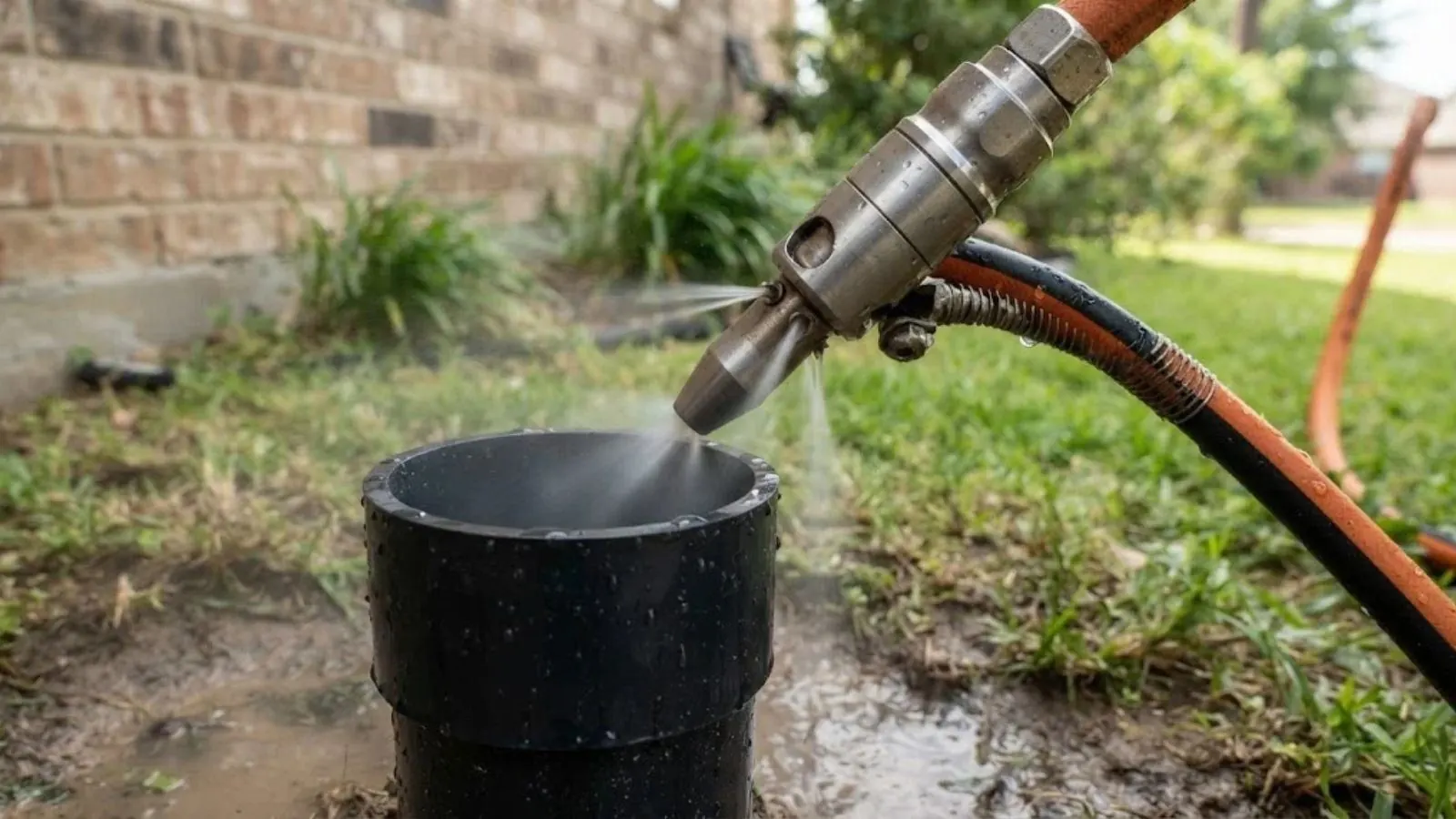
Hydro jetting in Fayetteville, GA uses a hose and a nozzle that fires water at high pressure to scour the inside of a drain or sewer pipe. It clears grease, scale, silt, and root hairs that a cable only pokes through.
If your line backed up in the middle of the night, the 24/7 line at Fayetteville 24/7 Plumbing is open, and until the technician arrives you should stop running water and keep clear of any overflow.
Jetting is a strong tool, but it is not the answer to every clog. This page explains when it earns its place, when a cable is enough, and when a pipe is too damaged to jet safely.
Is jetting the right tool for your clog
A quick way to decide
Jetting makes sense when the same drain clogs again within weeks, when a cable passes through but the water still moves slowly, or when a camera shows a heavy coat of grease or scale on the pipe wall.
A simple one-time clog from a wad of paper or a toy rarely needs it. For that, ordinary drain cleaning is quicker and costs less. If you are unsure, describe the pattern to dispatch and let the plumber choose on site.
The key signal is a return. A clog that comes back at the same spot tells you something is still coating or entering the pipe, and a cable cannot fix that.
Cable versus jet, side by side
| Question | Cable (snake) | Hydro jet |
|---|---|---|
| What it does to the clog | Bores a hole through it or hooks it | Washes it off the pipe wall and flushes it downstream |
| Best for | Single blockages, hair, paper, a stuck object | Grease, scale, silt, fine root growth, repeat clogs |
| Leaves behind | A coating that can re-clog | A near-clean pipe interior |
| Risk to old pipe | Can scratch or catch on a joint | Too much pressure can harm a weak or cracked pipe |
| Typical use | First attempt on a simple clog | Stubborn lines and maintenance cleaning |
Neither tool wins everywhere. Many jobs start with a cable to open a path, then follow with a jet to finish the pipe.
When the snake stops short or keeps coming back
A cable that stops partway through the line, say after a long run toward the street, can mean one of three things. It may be a dense root mass, a joint that has shifted, or a belly in the pipe where water sits. Jetting helps with the first and can show you the second and third, because water that will not pass tells the plumber something.
Clay-heavy Piedmont soil moves with wet and dry seasons, and that movement can pull joints slightly out of line. Roots find those gaps first. A jet can clear the roots, but it cannot realign a joint, so if clogs return after a few months, ask for a camera look. A sewer camera inspection shows whether the line needs more than cleaning.
Grease and scale in kitchen and main lines
Fat poured down a sink cools into a waxy layer. Over time it narrows the pipe from the wall inward, and a cable only drills a small channel through the middle. Jetting strips the layer back to the pipe wall, which is why a kitchen line that was jetted can stay clear far longer.
Mineral scale builds in older drain lines the same way. It is rough, and rough surfaces catch more debris. A jet with the right head can remove loose scale, but hard, fully cemented scale may need another method.
Backed up now: what to do while you wait
If sewage or gray water is coming up in a tub, floor drain, or shower, treat it as an emergency. Stop all water use, including the washer and dishwasher, and do not flush. The line may still be draining from the toilets, which makes the overflow worse each time.
Tell dispatch at call (770) 214-4545 what is overflowing and how long it has been slow. Night and weekend calls are handled the same way, and the technician can decide on arrival whether a quick cable pass or a full jetting is the right start. Same-day appointments are available when the schedule allows.
When jetting is the wrong tool
- Collapsed or crushed pipe: water cannot clear what is physically gone. This is repair work, and our sewer line repair page covers the options.
- Cracked or open joints: high pressure can push water and debris into the soil around the pipe.
- Very fragile or old pipe: a technician may choose a gentler cleaning method.
- Fixtures with a failed seal: pressure through the line can expose leaks you did not know about.
- A foreign object: a lodged toy or tool may need retrieval, not washing.
A good plumber will look at a camera image or test with a cable first if there is any doubt. If the pipe is not fit for jetting, they should say so and explain why. Cleaning an exposed crack does not fix it, and it can make the leak worse.
What shapes the price, and what to confirm
Jetting costs more than basic cabling because the equipment is larger and the job takes longer. The main factors are line length, how many access points exist, how heavy the buildup is, and whether a camera run is included.
A solid quote names the line being cleaned and tells you whether a before-and-after video is part of it. For the Fayetteville ZIP codes 30214 and 30215 the process is the same.
Homeowners policies generally respond to sudden accidental damage, not to routine cleaning or wear, and policies differ, so check yours. If the clog came from tree roots, ask the plumber how likely they are to return. For pricing on your line, call (770) 214-4545. For a main-line backup, sewer line cleaning covers the larger picture.
Same drain, same clog, third time?
Describe the pattern to dispatch and we will help decide between a cable and a jet.
Hydro Jetting questions from Fayetteville homeowners
Yes. The dispatch line at (770) 214-4545 is open 24/7. Stop water use, tell dispatch where the overflow is, and wait for the technician, who will choose between a cable and a jet on arrival.
On sound pipe, a properly set jet is safe. On cracked, collapsed, or very worn pipe, pressure can make things worse. That is why a camera look or a cable test comes first when the pipe condition is unclear.
No. It cuts and flushes the roots in the pipe, but the tree outside still wants water. Roots can return if there is a gap to enter, so the cleaner the pipe and the sooner you repair a joint, the longer you stay clear.
It might be. A snake that stops at the same spot can mean roots, a shifted joint, or a low section. Jetting may help, but ask for a camera look so you are not paying to clean a pipe that needs repair.
Consumer units exist, but they are weak and easy to misuse. High pressure inside a pipe you cannot see can harm a joint or send water back into the house. This one is best left to a trained technician.
There is no single schedule. A kitchen line with heavy grease use may need it more often than a bathroom line. Ask the plumber what they saw on the pipe wall and plan from that.
Line length, access points, how heavy the grease or root buildup is, whether a camera run is part of the visit, and the time of day. A good quote names the line being jetted and what happens after. Call (770) 214-4545 for a price on your situation.
Sources and standards. Pipe condition findings follow the way camera inspectors code defects under NASSCO's Pipeline Assessment Certification Program. Jetter and nozzle makers publish pressure guidelines, and a plumber follows them for each pipe material.