
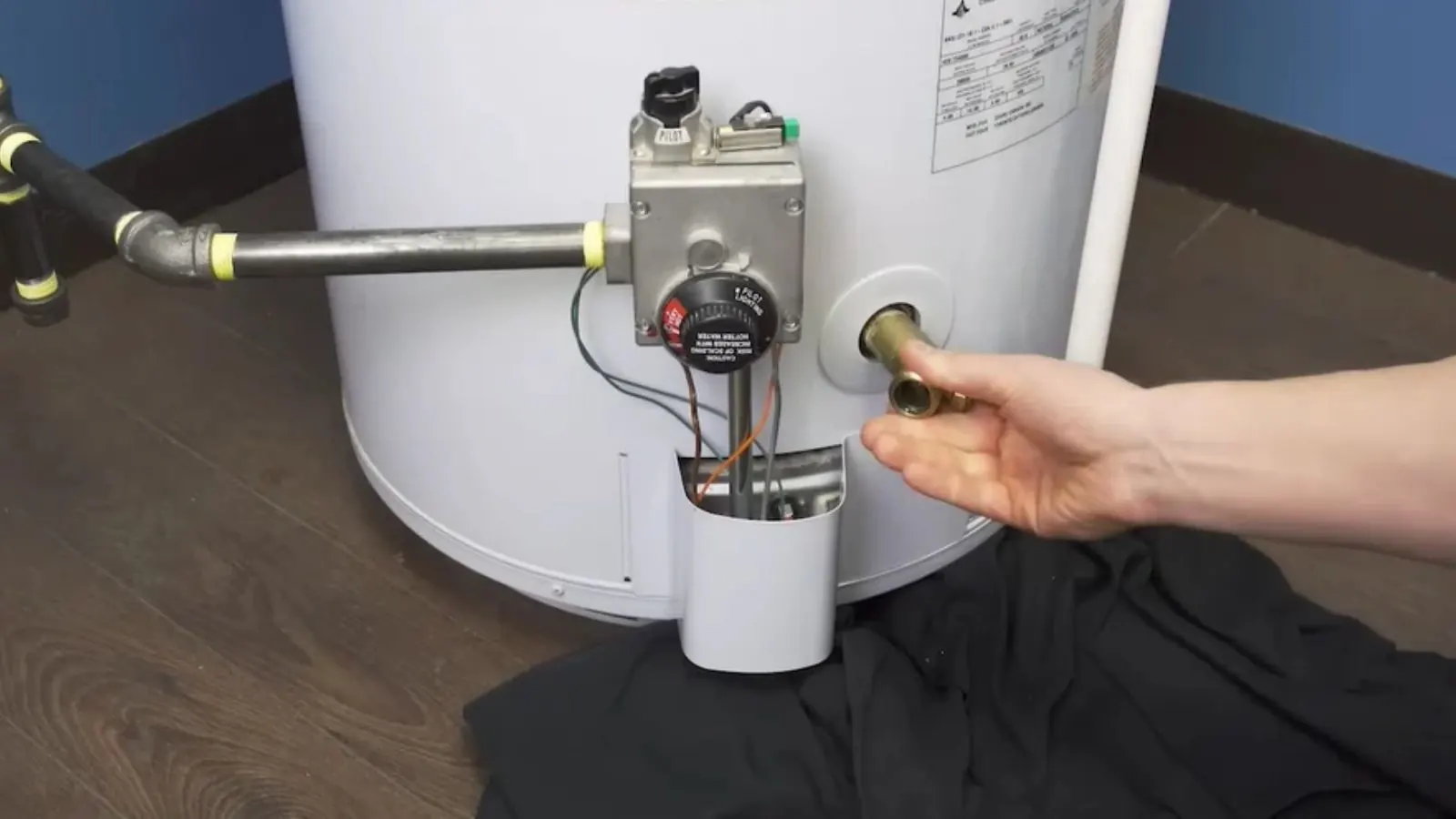
If your gas water heater stopped making hot water, a worn igniter is one common cause, and replacing it is a short repair for a licensed plumber. The part sparks or glows to light the burner on a heater with electronic ignition. When it fails, the burner never lights and the water goes cold.
Before anything else, one safety rule. If you smell gas, leave the building, then call 911 or your gas utility from outside. Call a plumber after that. The rest of this post covers the symptoms, the few things a homeowner can check, and where to stop.
Gas smell: what to do first
Stop and leave
Rotten-egg odor near the heater means gas may be escaping. Do not light anything, use a switch, or try to find the source. Walk everyone outside, then call 911 or the gas utility. Wait for them to clear the home before you call a plumber.
No plumber can promise a gas leak response time, and none should. The utility and the fire department are the right first calls. Once the home is cleared, a licensed plumber can look at the heater and its gas connections.
Pilot light or electronic ignition: which do you have?
Older gas heaters keep a small pilot flame burning all the time. A thermocouple senses that flame and keeps the gas valve open. Newer designs skip the standing flame and use an electronic igniter that lights the burner only when the thermostat calls for heat.
| Feature | Standing pilot | Electronic ignition |
|---|---|---|
| How it lights | A small flame stays lit | A spark or hot surface lights the burner on demand |
| Part that fails | Thermocouple or pilot assembly | Igniter, sensor, or control board |
| Visible clue | You can see a small flame in a window | No steady flame, a clicking sound or glow at start |
| Needs power | Usually no | Often yes, for the board and igniter |
Look at the label and manual to see which type you have. The model number tells a plumber the exact igniter part to order.
Symptoms that point to the igniter
A bad igniter can mimic other faults, so treat these as clues, not a diagnosis.
- The heater is cold and you hear no click or see no glow when hot water is called for.
- You hear repeated clicking but the burner never lights.
- The burner lights briefly, then shuts off.
- An error light on the control board flashes a pattern the manual ties to ignition.
- Hot water works some days and not others, as the part weakens.
Other causes look the same. A bad thermostat, gas valve, thermocouple, sensor, or a blocked air intake can all keep a burner from lighting. That is why the part should be tested, not just swapped.
What a homeowner can safely check
A few checks are low risk and cost nothing. Do them only if you smell no gas.
Check the power
Confirm the breaker or outlet that feeds the control board has power, if your model needs it.
Check the gas supply
Make sure the gas shutoff valve on the line to the heater is open, in line with the pipe.
Read the display
Note any error light or code and look it up in the manual.
Check the thermostat setting
Confirm it is set to a normal temperature and not on a vacation or off setting.
Stop there
Do not remove the burner cover, probe the igniter, or relight a pilot you cannot see clearly.
Write down what you found before you call. Note the brand, the label's model number, whether the heater makes any sound at all, and how long the water has been cold. That short list helps the plumber bring the right part and saves a second trip.
When to stop and call a licensed plumber
Stop if the checks above do not restore heat, or if you see soot, scorch marks, a yellow flame, or water around the base. Those point to problems beyond an igniter. Water leaking from the tank also means the heater may be at the end of its life, and our water heater repair page covers how a technician sorts repair from replacement.
Replacing an igniter involves isolating gas, removing the burner assembly, fitting the correct part, and testing for leaks and proper ignition. That is gas work, so it belongs with a licensed plumber. When you are ready, call (770) 214-4545 and describe your heater and what it does.
Igniter, or a bigger conversation about the heater?
An igniter is a modest part on a heater that is otherwise sound. On an old heater with sediment, rust, or a leak, the same call might lead to a different recommendation. Age, tank condition, and parts availability all enter the decision.
A fair quote lists the part by model number, labor, and any gas leak test. It should also say what else the technician checked, such as the venting, the gas pressure at the heater, and the temperature and pressure relief valve. If the tank is tired, ask for a replacement quote beside the repair. Our water heater replacement page describes that visit.
Checking who works on your gas heater
Gas work should go to a licensed professional. Georgia licenses plumbers through the Georgia State Division of Master and Journeyman Plumbers, part of the State Construction Industry Licensing Board, which runs through the Georgia Secretary of State. The Secretary of State website has an online Licensee Search, and any Fayetteville homeowner can use it to verify a plumber before the visit.
The same search works for a neighbor in Peachtree City or anywhere else in the state. Permit rules vary, so ask the Fayetteville building department whether a water heater job in your home needs one.
Heater will not light and no gas smell?
Tell the plumber what you see and hear, and they can plan the right part before arriving.
More questions answered
We do not recommend it. The job involves gas, a sealed combustion area, and a leak test. A mistake can be dangerous, and a wrong part can fail fast.
The igniter may be sparking without a flame because gas is not arriving, the sensor is bad, or air flow is off. A technician tests the sequence step by step. The cause is not always the igniter.
There is no single answer. Heat and cycling wear them down over time, and the maker's parts guide gives the best guide for your model. A weak igniter often fails before it dies completely.
The part for your model, how easy the burner is to reach, diagnostic time, and any related parts that also need work. A good quote lists them. Call for a clear price before work starts.
Homeowners policies generally respond to sudden accidental damage, not to wear and tear or the repair of the failed part itself. Policies differ, so check yours.
A pilot that will not stay lit is a sign something is wrong with the sensor, draft, or gas supply. Turn the gas control to off and have a plumber look. If you ever smell gas, leave and call 911 or the gas utility.
Use the Licensee Search on the Georgia Secretary of State website. It lists plumbers licensed through the state board. Ask the company for the name of the licensed plumber and check it there before they start.
Sources and standards. Gas appliance work follows the manufacturer's service instructions and the National Fuel Gas Code (NFPA 54). If you smell gas, leave the building and call 911 or the gas utility, according to standard gas safety guidance.