
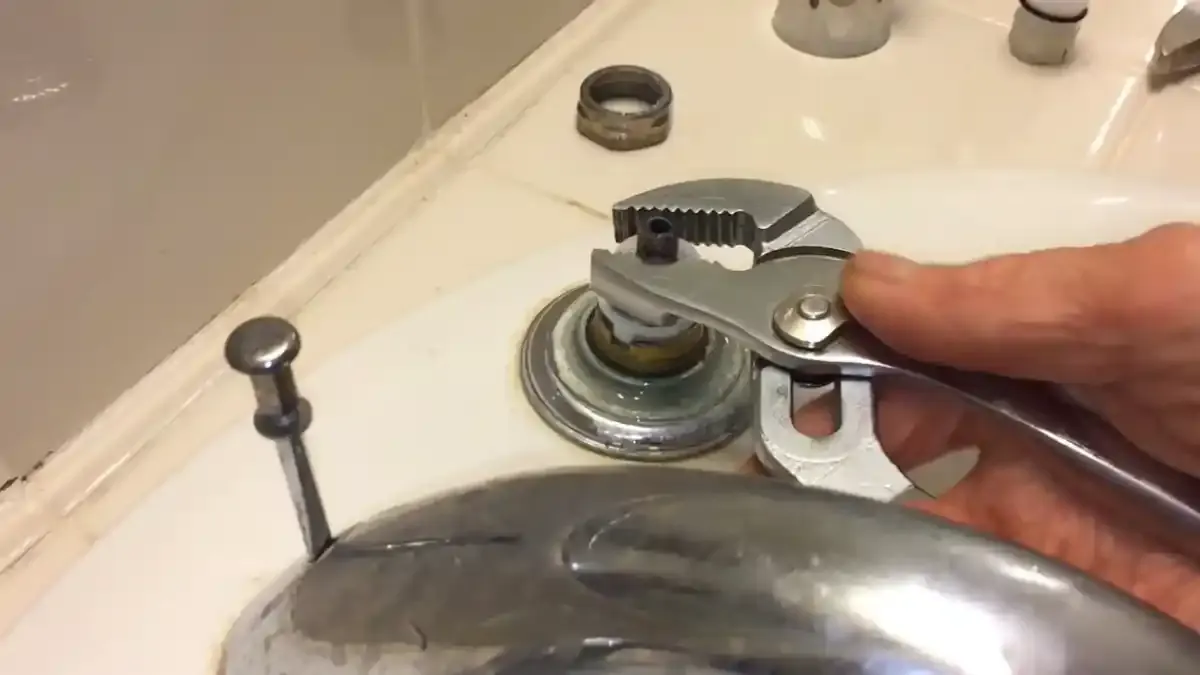
To fix a leaky bathtub faucet in Fayetteville, GA, first work out where the water is coming from. A drip from the spout usually means a worn diverter or a failing valve inside the wall. A drip from the handle points to a worn cartridge or stem. Shut off the water, swap the worn part, and the leak normally stops.
The tricky bit is telling the three apart. This guide walks through the clues, the shutoff question, a general-level repair sequence, and the point where a plumber is the better call.
Start by watching the drip
Do not pull anything apart yet. Turn the handle off firmly, dry the tub and the wall plate, and watch for a few minutes. Where the first bead of water forms tells you most of what you need to know. A drip that keeps going while the handle is fully off means water is leaking past a part that should be sealing.
Also notice when it happens. A drip that only appears right after a shower is often water draining out of the pipe behind the wall. A steady drip all day points to a worn seal. If only the hot side drips, the problem is usually the hot-side stem or cartridge.
Spout, valve, or cartridge: reading the clues
Most tub faucets leak from one of three places. The table matches what you see to the part that is usually failing.
| What you see | Likely part | Typical fix |
|---|---|---|
| Water drips from the spout when off | Cartridge, stem, or valve seat | Replace the cartridge or the washer and seat |
| Water sprays from the spout in a weak stream while the shower runs | Diverter that no longer seals | Replace the diverter or the spout |
| Water leaks around the handle | Worn O-ring or loose packing | Replace the O-ring or tighten the packing nut |
| Water seeps where the spout meets the wall | Failed seal or loose spout | Reseal or tighten the spout, or swap it |
| Hot water only drips | Worn hot-side stem or cartridge | Replace that side only |
| Wet drywall or ceiling below | Leak in the wall or at a valve body | Open access and inspect the pipe |
If you have two handles, you are likely dealing with compression stems and rubber washers. A single handle usually means a cartridge or a ball-style valve. Both kinds wear out, and replacement parts are made for the specific brand, so take the old part with you when shopping.
Finding the shutoff before you touch the handle
Some homes have small stop valves behind an access panel on the other side of the tub wall, in a closet, or in a basement ceiling. Many do not. If there are no local stops, shut off the main water valve for the house and open a faucet elsewhere to drain pressure.
Know where the main shutoff is before you need it, and try turning it once in a calm moment. A valve that has not moved in years can stick or break. If it will not close, stop and call a plumber, because forcing it is how a small drip turns into a flood.
Plug the drain first
Small screws and clips drop straight into the tub drain. Stuff a rag in the drain opening and lay a towel in the tub before you remove a handle or trim.
A general-level repair sequence
The exact steps vary by brand, and the instructions that come with the replacement part are the best guide. The outline below covers the usual order for a cartridge or stem leak.
Shut off the water
Close the stop valves or the main, then open the faucet to confirm the flow has stopped.
Remove the handle and trim
Look for a cap or set screw. Pry the cap gently, loosen the screw, and slide the handle off.
Pull the cartridge or stem
Unscrew the retaining nut or clip. Note how the old part sits so the new one goes back the same way.
Inspect the seat and O-rings
Look for pitting, mineral crust, or torn rubber. Clean the seat gently and replace worn O-rings.
Install, reassemble, and test
Seat the new part, tighten the nut by hand and a little more, turn the water back on slowly, and check for drips.
Do not over-tighten anything, and do not force a part that resists. A seized cartridge sometimes needs a puller made for that brand. That is a common stopping point for homeowners.
Jobs that belong to a plumber
- No shutoff that works: the main or local stop will not close fully.
- Stuck cartridge or corroded stem: parts that snap or round off are hard to recover.
- Leak inside the wall: stains on the ceiling below or a damp wall near the tub.
- Valve body replaced: when the valve behind the tile has failed, it may mean opening the wall.
- Repeated leaks after a repair: the seat or valve body is often the real problem.
If you see signs of water inside a wall, the right first step is finding the source, which is the work behind leak detection.
For the faucet itself, dripping handles, cartridges, and shower valves are covered on the faucet repair page. A dripping tub faucet is not usually an emergency, but a leak behind the wall can be, so shut the water off if you see it spreading.
What drives the cost of a tub faucet repair
Cost depends on whether the fix is a cartridge swap or a full valve replacement, how easy the valve is to reach, whether the tile or wall must be opened, and how many fixtures share the same shutoff.
A good quote lists parts, labor, and any wall or tile repair separately, so you can compare it fairly. To describe your tub and get a clear price before work starts, call (770) 214-4545.
A homeowners policy generally responds to sudden accidental damage and not to the worn faucet itself, and policies differ, so check yours. Our service area includes ZIP codes 30214 and 30215 in Fayetteville.
What this means in Fayetteville
Fayetteville homes get water from two places. According to the City of Fayetteville 2025 Water Quality Report, three deep wells supply about half of the water, and the Fayette County Water System supplies the rest. That means your tap water can reflect either source, and the report does not list a hardness figure.
This matters for faucet parts. If you see white crust around a cartridge or aerator, test your tap or ask the water utility for its annual water quality report, also called a Consumer Confidence Report.
Mineral crust shortens the life of seals, and a plumber can match the part and the cleaning routine to what you find. The same advice applies to homes over in Peachtree City, which sits on the Highway 54 corridor with Fayetteville.
Drip will not quit after a new washer?
A plumber can pull the cartridge, check the seat, and tell you whether the valve behind the wall is the real culprit.
More questions answered
Water left in the pipe behind the wall can drain out slowly after the handle is turned off. A short trickle that stops within a few minutes is usually normal. A drip that continues for hours means a worn seal or cartridge.
Often, yes, if the valve body behind the wall is in good shape. The new cartridge must match the brand and model. If the valve seat is pitted or the body is cracked, the cartridge alone will not stop the drip.
Not for most drips. Cartridges and stems come out through the handle opening. Opening the wall is usually needed only when the valve body or the pipe behind it has failed.
It adds up over days and weeks, and it can stain the tub and raise your water bill. Fixing a drip early is usually a small job, while leaving it can wear the valve seat and make the repair larger.
A diverter that no longer seals lets water leak out of the spout while the shower runs. The fix is usually a new diverter or spout, not a new valve.
The main factors are the part itself, how easy the valve is to reach, whether tile or drywall must be opened, and whether stops are available. A plumber can give a clear price before work starts. Call (770) 214-4545 to describe your faucet.
The city report names two water sources but gives no hardness number, so there is no local rule of thumb. If you see crust on fixtures, test your tap and ask the utility for its water quality report. A plumber can pick parts that suit what you find.
Sources and standards. Repair steps follow the faucet maker's instructions for your model. Replacement parts that touch drinking water should be certified to NSF/ANSI 61, and WaterSense lists efficiency standards for showerheads and faucets.