
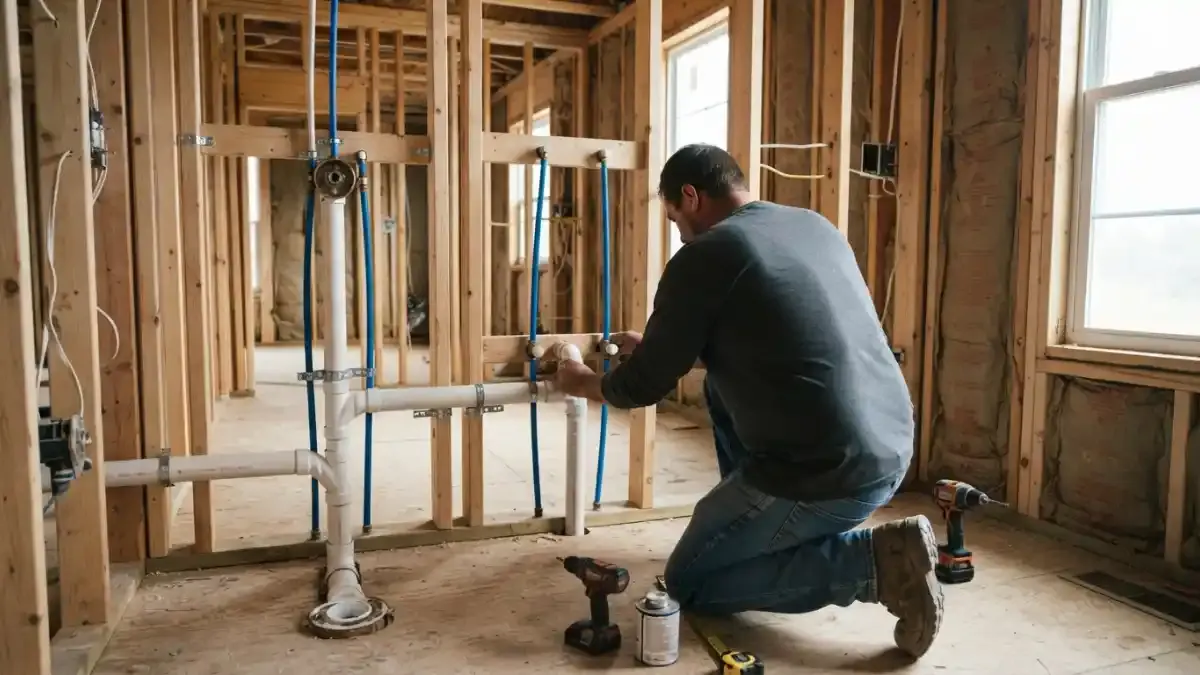
A blocked or broken plumbing vent often shows up as gurgling drains, several fixtures draining slowly, or a sewer smell inside the house. If you have those signs in Fayetteville, GA, the vent may be the cause, but a plain drain clog can look almost the same. A plumber tells them apart by testing, not guessing.
This guide sorts the symptoms, explains where vents tend to fail, describes how the diagnosis works, and shows when the problem is a drain clog instead.
Gurgling, slow drains, and smells: what each one suggests
Homeowners describe vent trouble in plain terms. The tub burps when the washer drains. The toilet bubbles after the sink runs. Every drain is slow, but none is fully stopped. A faint sewer smell comes and goes. Each clue has a likely meaning, and the table pairs them.
| What you notice | Likely cause | First check |
|---|---|---|
| Gurgle after a toilet flush | Partial vent blockage or a drain restriction | Does it happen at one fixture or several? |
| Several fixtures drain slowly | Main vent blocked, or a main drain clog | Does water back up in the lowest drain? |
| Sewer smell near one drain | Dry trap or a failed vent connection | Run water in the fixture for a minute |
| Sewer smell outside near the roof | Vent termination issue | Look for a damaged or loose pipe |
| Toilet bowl water level drops or bubbles | Air being pulled through the trap | Watch it as another fixture drains |
Gurgling by itself does not prove a vent problem. It only tells you air is moving through a trap where it should not.
Where a vent usually fails
Most vents run from the drain pipes up through a wall and out of the roof. The top is the most exposed part. Leaves, a bird nest, a wasp nest, or debris can plug the opening.
Inside the house, the pipe can fail in other ways. A joint can crack or pull apart. A section can sag and trap water. A previous remodel may have capped or crushed a vent without anyone noticing. Rodents or insects occasionally nest in vent pipes, too.
- Roof opening: blocked by debris or nesting.
- Attic section: disconnected at a joint or crushed during other work.
- Wall run: a break after a remodel or fixture swap.
- Sagging pipe: a low spot that holds water and cuts airflow.
- Missing connection: a fixture added without a proper vent.
How a plumber diagnoses a vent
The first move is to ask questions. Which fixtures act up, when, and what changed lately. Then the plumber tests. Running water at several fixtures at once shows which ones interact. Watching the traps shows whether air is being pulled through them.
From there, the roof comes next. A plumber can look at the vent opening and run a camera or a line down the pipe to find a blockage. Smoke or a pressure test can reveal a cracked vent that a quick look misses. Each step narrows the cause before anyone cuts into a wall.
A note on roof work
Climbing onto a roof to clear a vent is a fall risk. If you cannot see the problem from the ground, leave the roof to the person with the right equipment and training.
Checks you can do safely from the ground
There is a short list of safe checks before you call. Run water into any seldom-used drain for a full minute, since a dry trap smells like sewer and is not a vent fault. Look at the roof line from the yard with binoculars, if you have them, for a visible pipe that looks broken or crowded with debris.
Note which fixtures gurgle and when. A short written list helps the plumber find the pattern faster. If the smell resembles natural gas rather than sewer, leave the building and call 911 or the gas utility before anything else.
When it is a drain clog and not the vent
A drain clog also causes gurgling and slow flow, so the two are easy to confuse. The difference is often in what stops. A vent problem tends to cause noise and sluggish drainage that comes and goes. A true clog tends to cause water that rises, stays, and backs up into a lower fixture.
If one sink is slow while every other fixture is fine, the clog is almost certainly in that branch, and drain cleaning is the usual fix. If several fixtures back up, the main line may be involved. A sewer camera inspection shows what is inside the pipe, so the repair can be matched to the real cause.
Repair options and the cost picture
Repair ranges from clearing a roof opening to replacing a cracked section of pipe in a wall or attic. Some jobs only need the opening cleared and capped with a guard. Others call for opening drywall to reach a broken joint. A plumber should tell you which, and why.
Cost depends on roof access, how deep the problem is, the length of pipe affected, and finish repairs afterward. Insurance usually responds to sudden accidental damage and not to wear or debris blockages, and policies differ, so check yours. We cover Fayetteville ZIP codes 30214 and 30215 for vent diagnosis. To describe your symptoms and get a clear price before work starts, call (770) 214-4545.
What this means in Fayetteville
Vent trouble is the kind of diagnosis where you want someone who is properly licensed. Georgia plumbers are licensed through the Georgia State Division of Master and Journeyman Plumbers, part of the State Construction Industry Licensing Board, run through the Georgia Secretary of State.
The Secretary of State site has an online Licensee Search. Before anyone opens a wall or goes onto your roof, you can verify the license there. The same check works for a plumber hired in Peachtree City or anywhere else in the state.
Drains gurgling and nobody knows why?
A licensed plumber can test the fixtures, check the vent, and tell you whether it is air or a clog.
More questions answered
It can, especially if the main vent is blocked. But a main sewer clog does the same thing. A plumber checks both so you do not pay for the wrong fix.
No. A dry trap, a leaking drain joint, or a wax seal under the toilet can all cause it. Run water in unused drains first, then look at the vent if the smell stays.
Usually not by itself. If sewage is backing up into a tub or floor drain, stop using water and call, because that is a drain blockage that needs prompt attention. Dispatch is open 24/7.
No. A vent is an air pipe, and liquid drain cleaners do not reach it. Chemicals can also harm pipes and cause trouble for the plumber who follows.
If the problem is at the vent opening, yes. Many diagnoses start with fixture tests and a look at the roof from a safe spot. Ask how the plumber plans to reach the vent.
Roof access, the length of damaged pipe, how much wall or ceiling must be opened, and finish repairs. A plumber can explain these before work starts. Call (770) 214-4545 for a clear price.
Use the online Licensee Search on the Georgia Secretary of State website. It covers plumber licenses issued through the state licensing board, so you can confirm the person before work begins.
Sources and standards. Vent layout follows the International Plumbing Code (IPC), the model code behind Georgia's state minimum plumbing code. Any change to a vent system should be checked with the Fayetteville building department, according to the permit rules there.