
The cost of slab leak detection in Fayetteville, GA comes down to a few factors. These are floor access, house size, the detection method, and whether you want the leak only found or also fixed.
We do not post dollar figures here because they would be guesses. What we can do is show you what moves a quote up or down, so you can read one with confidence.
A slab leak is a water line that has started leaking in or under the concrete floor of your home. Finding it is its own job, separate from repairing it. Below you will see what a fair quote lists, which signs justify paying for detection, and what to do while you wait for a plumber.
Locating a slab leak is not the same job as repairing it
Detection answers one question: where exactly is the water escaping? The plumber listens, scans, and tests until a spot on the floor plan is marked. That work stands alone.
Repair is a second job with its own scope. It might mean opening the floor above the leak, rerouting the line through the attic or walls, or replacing the whole run. A quote that blends the two without separate lines makes it hard to compare, so ask for them apart.
Our leak detection service covers the finding step. If the result points to the floor, the repair options are laid out on our slab leak repair page.
The factors that move the price of detection
Each factor below changes the time on site or the tools needed.
| Factor | Why it matters | What to tell the plumber |
|---|---|---|
| Floor access | Tile, hardwood, and furniture slow the scan. Bare concrete is quicker. | Floor type in each room and any built-ins |
| Size of the home | More floor and more pipe run means more points to test. | Rough square footage and number of baths |
| Detection method | Listening gear, thermal imaging, pressure tests, and tracer gas each need different tools and time. | Ask which one is planned and why |
| Number of leaks | A second leak means a second search. Old pipe often fails in more than one place. | Pipe material and age, if you know them |
| Report needed | Photos and written findings for an insurer take extra time to prepare. | Whether you plan to file a claim |
None of this is a dollar figure, and that is on purpose. For a number tied to your house, call (770) 214-4545 and describe the floors and the symptoms.
How the method changes the work
Leak detection uses acoustic listening devices, thermal cameras, pressure tests on the water lines, and sometimes tracer gas. A plumber rarely needs all of them. A pressure test can confirm that a line is losing water. A listening device then narrows down where the sound is loudest.
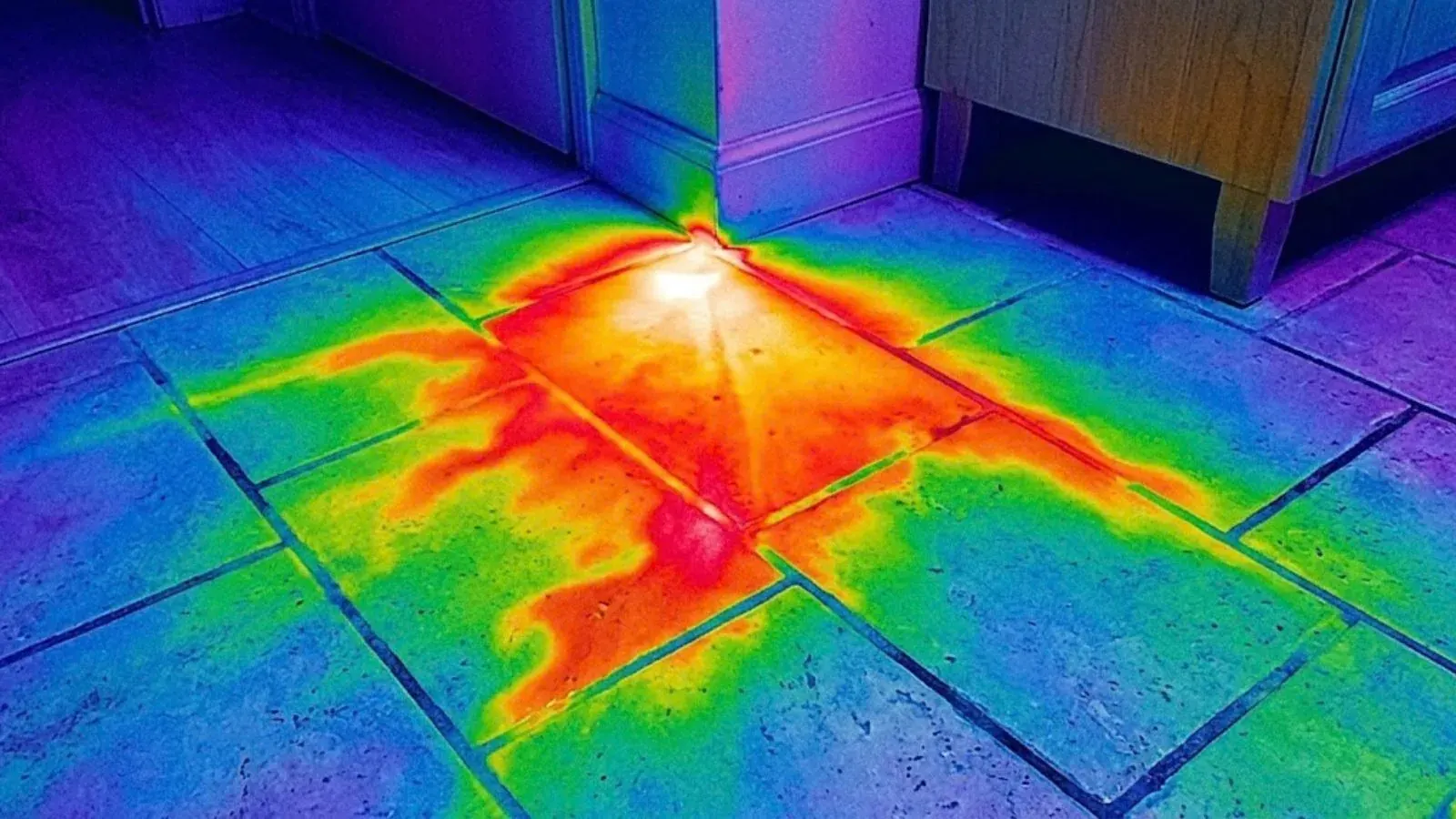
Thermal imaging helps when a hot water line is the culprit, since the warm path shows against cooler concrete. Tracer gas is slower but can pinpoint a leak when sound travels poorly. Stubborn leaks need more methods, and that is a fair reason for a higher quote.
Signs that justify paying for detection
Detection is worth the money when the signs point to hidden water under the house. These are the ones homeowners describe most:
- Meter spinning: the water meter keeps moving after every tap and appliance is off.
- Warm floor spot: a patch of floor that stays warm, often over a hot water line.
- Creeping bill: the water bill climbs and no one is using more water.
- Water sound: a hiss or trickle near the floor when the house is quiet.
- Wet edges: damp baseboards, lifting flooring, or a musty smell with no visible source.
- Low pressure: a drop in pressure that shows up at every fixture, not just one.
One sign alone can have a simple cause, like a running toilet. Two or three together are a good reason to book detection before the damage spreads.
What a clear quote should itemize
Ask for the scope in writing before work starts. We quote a clear price before work begins, and you should expect the same from anyone you hire. A useful quote lists the testing methods, the areas covered, and what happens if the first search finds nothing.
Scope of the search
Which rooms and which lines are included, and whether the whole slab or one zone is covered.
Methods named
The tools the plumber expects to use, written plainly.
What you receive
A marked location, a verbal report, or a written report with photos.
Repair kept separate
Any repair options listed as their own lines, so you can decide after the leak is found.
Limits stated
What the plumber will tell you if the leak cannot be located in one visit.
What you can do before the plumber arrives
You can save time and limit damage with a few safe steps. Turn off every tap and appliance, then look at the meter. If it still moves, water is going somewhere. Shut the main valve if the floor is getting wet, and move rugs and furniture off the damp area.
Do not cut into the floor or drill to look for the pipe. You can damage a line or a conduit. Take clear photos of any wet spots, then leave the rest to the plumber.
If you smell gas at any point, leave the building and call 911 or the gas utility first. Call a plumber only after you are safe.
Honest limits and the insurance angle
Detection does not always end in a quick fix. Some leaks sit under a wall, a cabinet, or a bathtub. In older homes, the pipe itself may be worn out, and a spot repair would only move the problem down the line. A plumber should tell you when the honest answer is a reroute or a repipe, not another patch.
On insurance, homeowners policies generally respond to sudden accidental damage, not to wear and tear or the repair of the failed pipe itself. Policies differ, so check yours. A written detection report is often useful when you speak to your insurer.
We serve homes in the 30214 and 30215 ZIP codes of Fayetteville, and we also work in nearby towns such as Peachtree City, where the same questions about floors, symptoms, and timing apply.
What this means for a Fayetteville house
Fayetteville grew fast. Census counts show about 5,800 residents in 1990, more than 11,000 in 2000, and nearly 16,000 in 2010. The city now describes more than 22,000 residents. Much of the housing stock grew up in the 1990s and 2000s, which means many homes have plumbing that has been in service for a couple of decades.
For you, that age matters when a quote arrives. Pipe that has run that long can fail in more than one place, so ask whether the plumber will test the nearby runs too.
The soil here is clay-rich Piedmont ground, and clay can hold water, so a damp patch outside may not sit right over the leak. Treat a wet yard as a clue, not as a map.
Hearing water but seeing nothing?
Describe the floors and the symptoms on the phone and a dispatcher will explain how a detection visit would run.
More questions answered
The main factors are floor access, home size, the methods used, how many leaks there are, and whether you need a written report. After-hours calls can also differ from scheduled visits. For a number that fits your home, call (770) 214-4545.
Yes. Detection is non-invasive. The plumber uses listening devices, thermal cameras, and pressure tests to mark the spot. The floor is only opened later, if you choose a repair that needs it.
You often cannot tell without testing. A warm floor spot or a meter that runs with everything off points low, while a stain on a wall or ceiling points higher. A pressure test and a listening scan can sort it out.
Check the simple causes first, such as a running toilet or a dripping outdoor tap. If the meter still moves with everything off, a hidden leak is likely and detection is reasonable. A small leak usually grows.
Most of the time, but not always. Deep lines, noisy surroundings, and several small leaks can make a search harder. A good plumber will tell you what was ruled out and what comes next.
It depends on your policy. Many policies cover sudden accidental damage but not wear and tear, and some treat the search for the leak differently from the damage it caused. Ask your insurer before you book.
Age alone does not mean a leak, but pipe that has been in the ground or under the floor for about two decades can wear out. If your Fayetteville home was built in that growth period and shows a warm spot or a running meter, detection is a sensible first step.
Sources and standards. The detection methods described here, including acoustic, thermal and tracer gas testing, are standard industry practice. For cost and coverage, ask for an itemized quote and read your policy wording, because terms vary by insurer.