
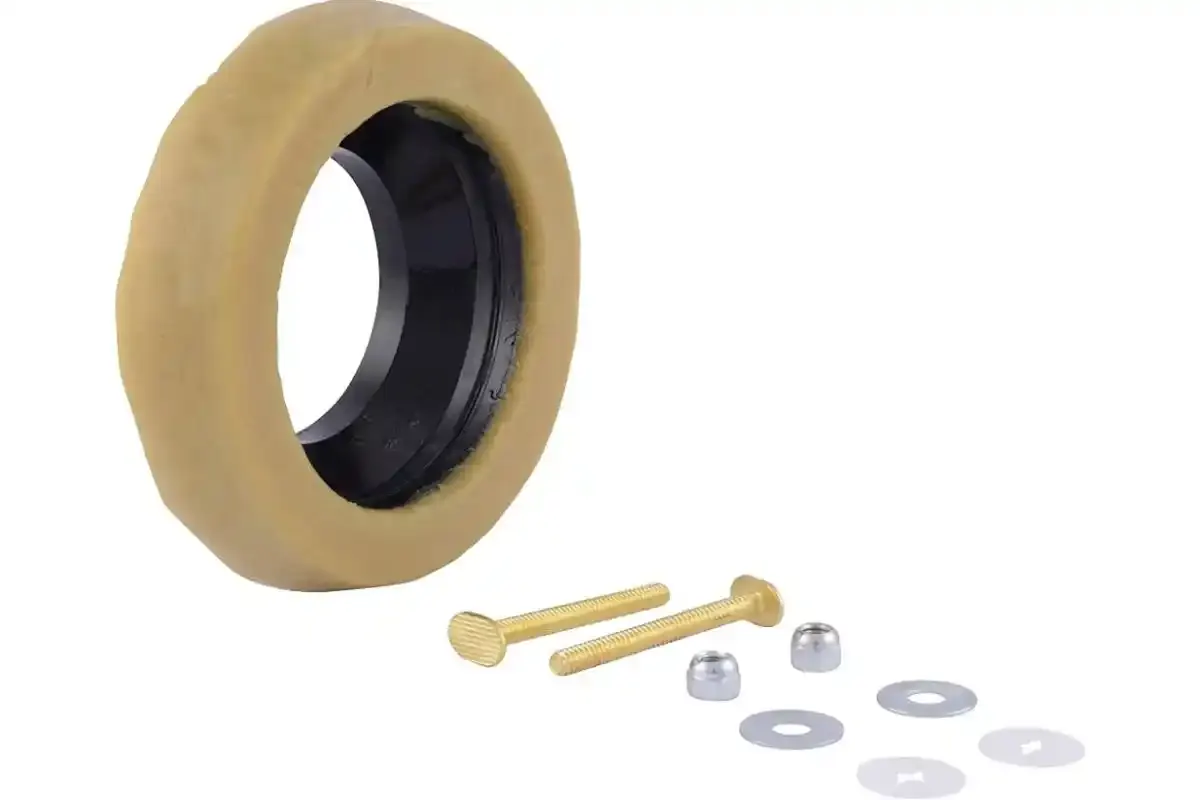
A toilet flange is the ring that bolts your toilet to the floor and connects it to the drain pipe below.
If it is cracked, rusted, or sitting too low, the toilet rocks, leaks at the base, or lets sewer odor into the bathroom. Toilet flange installation and repair in Fayetteville, GA usually means a repair ring for light damage or a new flange when the old one has failed.
This guide explains how to tell which situation you have, what the floor has to do with it, and where a homeowner should stop and hand the job to a licensed plumber.
What the flange does under the toilet
The flange sits on top of the drain pipe, either resting on the finished floor or set just below it. Two slotted bolts hold the toilet down. A wax ring or a similar gasket fills the gap between the flange and the toilet outlet, so water and gas go down the drain instead of onto the floor.
Flanges are made from PVC, cast iron, brass, or stainless steel. Metal ones can rust. Plastic ones can crack when a toilet is over-tightened or the floor moves. Either way, the seal only works when the toilet sits flat on a solid flange.
Clues that the flange is the problem, not the toilet
Homeowners usually notice the toilet first. A rocking seat, a damp spot that returns after wiping, or a faint sewer smell near the base all point down to the seal. These are the common ways it shows up:
- Rocking: the bowl shifts when you sit down, even after you snug the closet bolts.
- Water at the base: moisture appears after a flush, not just after a bath or a mop.
- Sewer smell: a gas odor that stays near the toilet and gets worse after flushing.
- Soft or stained floor: vinyl lifts, tile grout darkens, or the floor feels spongy near the bowl.
- Slow flushing with gurgles: sometimes the flange has sagged and pinched the drain opening.
- Bolts that spin freely: the flange is cracked or no longer anchored to the floor.
A leak at the base can also come from a loose tank connection or a bad supply line, so a plumber checks those first. If the leak only shows up when the toilet is flushed, the seal under the bowl is the likely source. Other toilet problems are covered on the toilet repair page.
Repair ring, spacer, or full replacement
Not every damaged flange needs to come out. The right fix depends on how much of the ring is broken and what the flange is bolted to. The table below shows how plumbers usually sort the options.
| Condition found | Typical fix | Trade-off |
|---|---|---|
| Slots cracked, pipe and floor sound | Stainless repair ring screwed over the old flange | Fast, but needs solid floor under the ring |
| Flange sits below the finished floor | Flange extender or thicker spacer, new wax ring | Works only if the pipe below is intact |
| Plastic flange broken off the pipe | Cut out and replace with a new flange | More labor, cleaner result |
| Cast iron flange rusted through | Replace the flange or the short pipe section | May open the floor around the drain |
| Subfloor soft or rotted | Repair the floor first, then set a new flange | Longest job, but the only lasting fix |
A repair ring is a good answer for a flange that is cracked at the bolt slots. A full replacement is better when the pipe itself has moved or the flange has pulled away. Avoid stacking several wax rings in a gap, because a thick pile of wax can squash out and fail.
Why the floor decides how long the repair lasts
A flange can only hold what it is screwed into. If the plywood around the drain has soaked up water for months, new screws will not bite and the toilet will rock again. This is why a plumber presses on the floor and checks for soft spots before choosing a part.
Remodels cause a different problem. New tile or thicker flooring raises the floor height, and the flange ends up sitting low in a pocket. A low flange leaves a gap that a standard wax ring cannot always seal. Extenders exist for this, but they must be matched to the real gap.
Limits of a quick fix
If the subfloor is rotted, a repair ring is a patch on a patch. The honest answer is to open the floor, repair the wood, and set the flange on solid ground. It is a bigger job, but it lasts.
How a wax ring replacement actually goes
A wax ring swap is a reasonable DIY job when the flange and floor are fine. Stop and call a plumber if you find a broken flange, black rot, or a drain pipe that wobbles.
Shut off and drain
Close the supply valve, flush, and sponge out the remaining water in the tank and bowl.
Lift the toilet
Disconnect the supply line, remove the nuts from the closet bolts, and lift straight up. The bowl is heavy, so get help.
Inspect the flange
Scrape off old wax and look for cracks, rust, and loose screws. Press the floor around it.
Set the new ring and lower the bowl
Place the ring on the flange or bowl outlet, guide the bolts through the holes, and press down evenly without twisting.
Tighten and test
Snug the nuts a little at a time, alternating sides. Flush several times and watch the base for moisture.
When to bring in a plumber
Call when the flange is cracked, the floor is soft, the drain pipe moves, or the same toilet has leaked twice after a wax ring swap. A plumber can also reset a flange during a bathroom remodel so the height matches the new floor. Work that moves fixtures or adds new drain runs falls under plumbing installation, and the technician can explain what applies.
Pricing depends on the flange material, how much floor repair is involved, whether the pipe below needs work, and whether the toilet itself is being reused. Ask for a clear price before work starts, and ask what is included for floor repair. For a visit, call (770) 214-4545 and describe what you see.
Insurance policies generally respond to sudden accidental damage and not to slow leaks or worn parts, and policies differ, so check yours before you assume anything is covered. Both Fayetteville ZIP codes, 30214 and 30215, are covered for this work.
What this means in Fayetteville
The city has grown quickly. Census counts show the population at 5,827 in 1990 and 11,148 in 2000, then 15,945 in 2010, so much of the housing stock grew up in the 1990s and 2000s. Houses of that era are now old enough to have had a bathroom remodel or two, and that is where low flanges and mismatched wax rings tend to appear.
If your bathroom floor was re-tiled or covered with thicker vinyl, ask the plumber to measure how the flange now sits against the finished surface. If you plan to move a toilet, permit rules vary, so ask the Fayetteville building department first. The same advice holds for homes along Highway 54 toward Peachtree City.
Toilet rocking or leaking at the base?
Tell dispatch what you see, and a licensed plumber can check the flange, the seal, and the floor beneath it.
More questions answered
Yes. A loose tank bolt, a worn supply line, or sweating from a cold tank can all leave water around the bowl. A leak that only shows after flushing points toward the seal under the toilet. Dry everything, flush once, and watch where the water first appears.
Snug, not hard. Tighten each nut a little at a time, alternating sides, until the toilet stops moving. Cranking down can crack the porcelain or a plastic flange, which turns a small leak into a repair.
Yes. Wax compresses into the shape of the joint and will not seal reliably a second time. Treat any lift of the toilet as a reason to fit a fresh ring and inspect the flange while it is off.
No. Dry traps, a blocked vent, or a leak in a drain line can cause similar odors. If the smell is strongest right at the toilet base and the bowl rocks, the flange seal is the first suspect. Otherwise a plumber checks the vent and drain.
The main factors are the flange material, the size of the floor damage, whether the pipe below needs work, and whether the toilet is being reused. Access and tile work also matter. For a clear price before work starts, call (770) 214-4545.
Not always, but it is worth checking. New tile or thicker flooring often leaves the old flange sitting too low, and a plumber can fix that with an extender or a resized ring. A flange in good shape on a solid floor can stay.
Sources and standards. Installation guidelines come from the toilet and wax ring makers and from the International Plumbing Code (IPC) as adopted in Georgia. Floor condition varies, so a licensed plumber decides between a repair ring and a replacement.